
Key Points
- Purchasing an HVAC system that’s properly sized for your home is vital for efficient operation and reliable climate control results throughout the space.
- A Manual J Calculation is how a contractor or HVAC installer determines the right size heating and cooling system for your space by taking factors like climate, insulation levels, square footage, and more into account.
Most homeowners don’t give their AC a second thought unless it stops working. If this happens, and you need to replace your system, you’ll need to know the correct size for your home. This is critical information to ensure you get the best comfort possible. An improperly sized system, either too large or too small, will provide inferior comfort — and nobody wants that. In this article, we'll cover the basics you need to know about proper air conditioner size calculations and give you the inside track on getting it right the first time.
Relevant Vocabulary: Tonnage & British Thermal Units (BTUs)
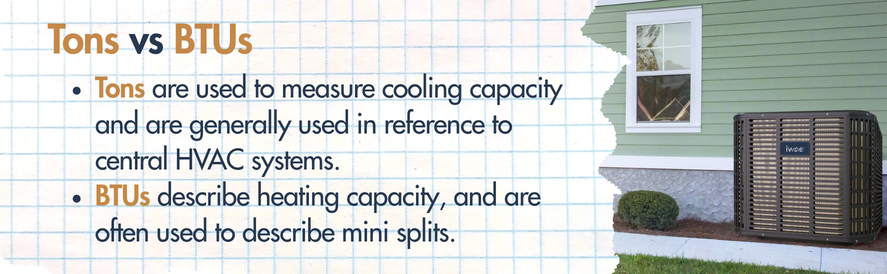
When we talk about air conditioner size, we're usually talking about tons. Tons are used to measure the cooling capacity of an appliance. Those are broken down as 1.5, 2.0, 2.5, 3.0, 3.5, 4.0 or 5.0 ton units for residential applications. There are larger sizes, but 6.0 tons and above are generally reserved for commercial applications. When a residential home requires more than 5.0 tons of capacity, the standard procedure is to install multiple smaller systems. For example, one might install two 3.0 ton systems instead of a single 6.0-ton machine.
Not all air conditioners are classified according to tonnage, though. Tonnage is generally used to size central air systems, but mini splits are sized based on the amount of BTUs they produce. BTUs (British Thermal Units) are a measure of heating capacity. For example, you might see air conditioner or heat pump systems classified according to one of the following rankings:
- 9,000 BTUs
- 12,000 BTUs
- 18,000 BTUs
- 24,000 BTUs
- 36,000 BTUs
These labels mean that the system will produce, at maximum capacity, the volume of cooling listed in BTUs.
The main divide here is between central air systems and ductless systems. Central air systems like packaged air conditioners or split systems are almost always labeled according to tonnage. BTU almost always denotes ductless mini-splits and window air conditioners. They're measured differently because their production capacities are not the same, but these measurements don’t exist in a vacuum. You can see the conversions and equivalencies below.
|
Square Footage |
Tonnage |
BTUs |
|
400 |
/ |
9000 |
|
550 |
1 |
12,000 |
|
600-900 |
1.5 |
18,000 |
|
900-1200 |
2 |
24,000 |
|
1200-1500 |
2.5 |
30,000 |
|
1500-1800 |
3 |
36,000 |
|
1800-2100 |
3.5 |
42,000 |
|
2100-2400 |
4 |
48,000 |
|
2400-2700 |
4.5 |
54,000 |
|
2700-3000 |
5 |
60,000 |
Within reason, there are certain home sizes that can be serviced by either a central air system or a mini split, but remember that you must consider far more than square footage when choosing the size and configuration for your HVAC system. Still, size does matter. There are no central systems equal to a 9,000 BTU window air conditioner, and no window units equal to a 5-ton package unit.
Cooling Load and Cooling Capacity
Some other vocabulary that you may encounter during your search for an air conditioner is cooling load and capacity. Understanding these terms will help you find the right size air conditioner. Here's what you should know:
- Cooling load: This term refers to how much cooling your home needs. The cooling load calculation considers the size of your house, how many people live there, the direction your house is facing and other relevant factors. When shopping for an air conditioner, you use the cooling load to help you choose how many tons or BTUs you need to sufficiently cool your home.
- Cooling capacity: This term describes the amount of cooling that an air conditioning system can provide. The larger the machine, the more heat it can remove. Look for an air conditioner with enough cooling capacity to reach the cooling load for your home.
Replacing an Existing System
It's easy to take your home's air conditioner for granted — that is until it fails and you're left with no way to cool your home. When this happens in the hottest part of the year, you'll want to find a replacement fast or else you'll be left without cool air in the dog days of summer. The first question many people in this position ask is, "Can I just replace my broken air conditioner with the same size unit?" The answer to this question depends on whether your property has undergone any significant changes since you bought or built it. If not, you can probably replace your broken unit with a new one that's the same capacity. If your 3-ton air conditioner burns out, you can buy a new 3-ton air conditioner, get it installed and go back to basking in the cool air. This is by far the simplest solution to figuring out the right air conditioner size. The original installer did all the heavy lifting, so you won't have to go to a lot of trouble.
New Construction, Remodeling, and So Forth
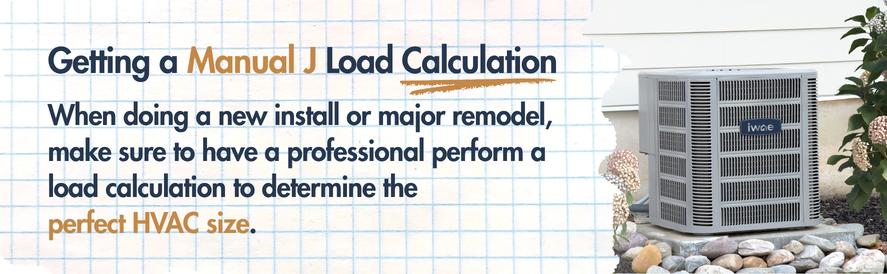
If you're remodeling your home and that involves changes to room sizes or overall square footage, you may want to consider reassessing your cooling load. In a newly constructed home, there is, obviously, no existing HVAC system to replace. Ergo, you can't just go with what you had since you had nothing. Unless you're building your own home, the chances are that your contractor will have an HVAC professional to figure this out. And how will they do that? The scientific approach to properly sizing an HVAC system is to perform the Manual J calculation.
What Is the Manual J Calculation?
The only way to know precisely what air conditioner size will work in a given building is by conducting a Manual J calculation. This calculation requires more than just measuring the square footage of the space. It does involve square footage, but this calculation also takes into consideration:
- The direction of the house: The sun rises in the east and sets in the west. The direction that your home faces will determine how the sun warms your home throughout the day and which size air conditioner you need.
- The layout of the home: An apartment with multiple rooms requires less power to cool than a large home with an open floor plan. It's important to consider the layout of your house and how the cool air will flow through the space. The number of floors in your home will also impact your HVAC setup because upper floors and lower floors retain heat differently.
- The number of doors and windows: Windows and doors have less insulation than solid walls, allowing cool air to escape and warm air to seep inside. If you have a lot of large windows or doors around your home, you'll need a stronger air conditioner to maintain a comfortable temperature.
- The ceiling height: Square footage measures the total area of the floor and doesn't account for ceiling height. An air conditioner will need more energy to cool a home with vaulted ceilings than standard nine-foot ceilings.
- The level of insulation: An older home with worn-out insulation will lose air through the walls. You can either install new insulation or purchase a larger air conditioner. A well-insulated home will retain the cool air so that you can get away with a small air conditioner.
- The local climate: The weather outside has a significant impact on the temperature inside your home. If you live in a warmer climate, your air conditioner will work harder to lower the indoor temperature. If you live in a colder climate, the air conditioner won't need as much energy to keep your home at the desired temperature.
The Manual J calculation is an involved process and not something a typical homeowner can undertake alone. You'll have to find a specialist that knows how to calculate the size of an air conditioner. How can you get this kind of work performed? Local HVAC professionals in your area may offer the service. You could also ask energy efficiency specialists or engineers in your region. A quick search online should point you in the right direction.
Pro Tip: Check out our simple explanation of Manual J Load Calculations for more information.
Zoned HVAC for Difficult Home Layouts
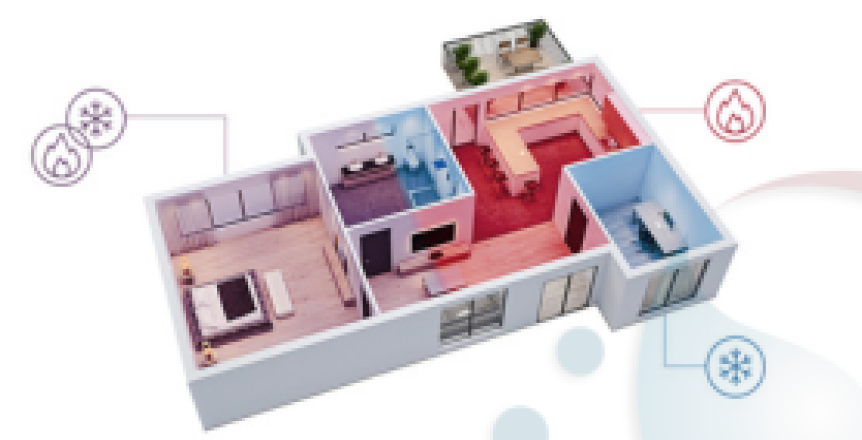
If you have a multi-story home, you’ll intimately understand the difficulty of keeping each level of your home comfortable. Have you ever closed the vents in the basement and the main floor in the hopes that you can better cool your upstairs rooms in the summer? What about closing vents upstairs so you might be able to force warm air to the main floor in the winter? If you’ve ever suffered this plight, you might want to consider zoned HVAC. Zoned HVAC lets you section off your home into different zones that utilize different thermostats. This allows you to have better temperature control, especially when different sections of your home have different temperature needs. For many multi story homes, it’s best to have one HVAC system per floor, when feasible. This goes for large homes over 3000 square feet as well. Even the strongest systems will struggle as your square footage rises. In this case, splitting your home into zones and individually heating and cooling each zone would be easier on your systems and your power bill.
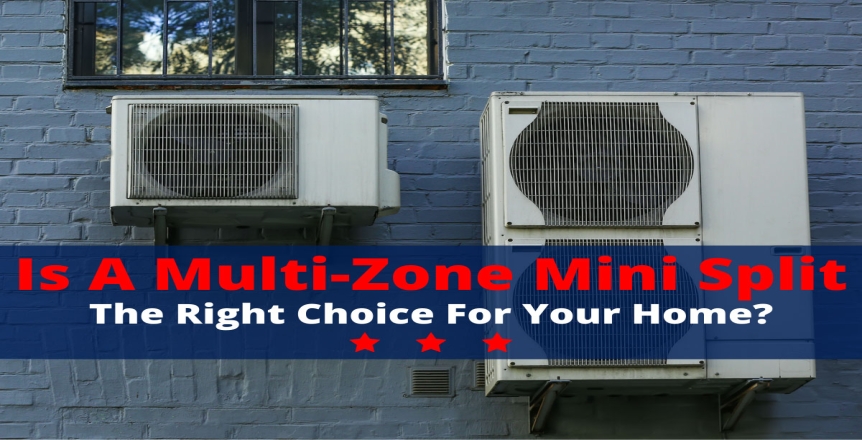
Pro Tip: Retrofitting your home from a single zone into multiple zones can be difficult, especially where ductwork is involved. However, it’s not impossible. Utilizing ductless mini splits can help you create new zones in your home without the need for major remodeling.
Myths About Air Conditioner Size
Choosing the right air conditioner for your home takes some level of time and effort. Rumors of shortcuts that make the process faster or easier can be tempting, but often lead to complications in the future. Here are some common misconceptions that you should disregard:
1. You Can Take an Educated Guess
Couldn't you just measure the square footage and make an educated guess? Sure, you could, but that's not a great idea. The square footage doesn't account for all factors that determine the correct air conditioner size for your home. A central air conditioner must be the appropriate size to function correctly.
2. An Undersized Air Conditioner Will Save Money
It's true that smaller air conditioners typically cost less. However, an undersized system is going to run constantly and won't keep your space cool. Purchasing a larger unit and running it on a lower setting will consume less energy. You'll save money and feel more comfortable if you buy the appropriate size air conditioner.
3. An Oversized Air Conditioner Will Work Better
It makes sense why some people think that an oversized air conditioner can save money by cooling the space faster with less energy. Unfortunately, that's not how it works. An oversized system will run hard for a short time, but it won't dehumidify properly. As a result, your space will be the temperature you want and still uncomfortable. The air will be clammy instead of cool. Plus, the parts will wear out faster from constantly turning on and off. A larger air conditioner costs more upfront, and if you have to replace it sooner, you'll end up spending more money in the long run.
What About Variable-Speed Technology?
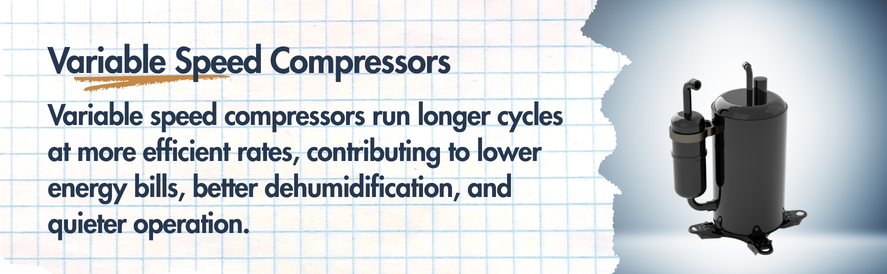
Undersizing is never good. However, the latest HVAC technologies go a long way to resolve the worst effects of oversizing. How so? An air conditioner is designed to cool and dehumidify simultaneously. As it produces cool air, it pulls humidity out of your air. A proper balance of moisture in your interior air will improve your comfort and improve overall air health. As we mentioned before, the problem with an oversized air conditioner is that its operating cycle doesn't last long enough to dehumidify the air properly. A variable-speed compressor can help with this challenge. Unlike a traditional one-speed compressor, a variable-speed model can operate at different stages. It initiates its operating cycle at the lowest setting. It can modulate up if necessary, but the ability to run on low means it doesn't have to run a hard start-stop cycle like an otherwise oversized system might. But what does this mean for the average person? It means that you have some wiggle room in terms of capacity when it comes to variable-speed systems like ductless mini-splits. For example, a variable-speed 24,000 BTU mini-split is generally considered suitable for 1,000 to 1,200 square feet. Of course, depending on the size of your space and other factors, it could work well with an 18,000 BTU system. You don't know that, of course, since there has never been a Manual J calculation performed on that detached garage where you want to put a new mini-split. Fortunately, the variable speed of the 24,000 BTUs means that if it's slightly oversized for its space, that's not a big deal. You should still get quality performance from the unit.
Frequently Asked Questions About HVAC Sizing
What size AC do I need for my house? What happens if my system is over- or undersized?
The size of AC you need for your house will depend on various factors, such as square footage, the number of rooms, the amount of direct sunlight your home receives, and others. It’s critical to get the correct size of HVAC system for your home. An undersized system will have to work much harder to maintain the temperature in your home, resulting in higher energy bills and a higher chance of the system falling into disrepair. Conversely, an oversized system will run too hard for too short of a time, resulting in uneven temperatures and higher humidity in your home.
What is a Manual J load calculation? Do I need one?
Technicians utilize a Manual J load calculation to determine what size of HVAC system you need for your home. This is the best way to determine your AC size as it considers multiple factors that impact your home’s heat gain and heat loss. It’s best to have a Manual J calculation performed before purchasing an HVAC system.
How many tons or BTUs per square foot?
Generally speaking, 1 ton will effectively service an area up to 550 square feet, and 1 ton is equal to 12,000 BTUs.
Should a professional size my system? Can I size an AC myself?
While homeowners can do basic size calculations based solely on the size of the area they want to condition, it’s best to have a technician do this. HVAC professionals understand how to perform a Manual J load calculation, which is the most thorough calculation you can perform for HVAC sizing.
Do You Still Have Questions About Air Conditioner Size?
Now, you should be fully equipped to figure out the tonnage or BTUs you need to keep your home cool or warm, as the case might be. Even if you're not in the market for a new system, this should be useful knowledge in the future since most homeowners will have to replace their home HVAC at least once in their lives. But do you still have questions? At Ingram's Water & Air, we want to ensure you have all the information you need. Reach out with any questions, or just drop them in the comments below!