

Key Points
- Central HVAC systems try to create a stable temperature throughout your entire house, but some spaces have more robust needs than others. Cooling an individual area like a single bedroom, detached garage, or attic often requires a single-zone solution.
- Choosing what type of small space AC best fits your needs depends on many factors, such as: your climate, the layout and size of the room, your temperature preferences, your home’s insulation quality, and more.
- Zoned heating and cooling is a great solution for a variety of spaces, including mobile homes, tiny homes, apartments, sheds, trailers, etc.
- Some small space AC cooling solutions are fans, portable ACs, window AC units, and single-zone ductless mini splits.
In a perfect world, specialized ductwork would be enough to ensure that your AC system maintains the perfect temperature in every room in your house. Unfortunately, HVAC experts haven’t figured out how to do this yet. There are several factors that impact how hot or cold a room might feel, ranging from the amount of direct sunlight it gets to how well insulated the walls are. Because this varies from room to room, it can be difficult to maintain even heating and cooling. Consider the small, stubborn spaces in your home. Maybe it’s a bathroom that feels frigid in every season, or maybe it becomes a sauna each time you turn on the hair straightener. Maybe it’s an upstairs bedroom that’s always ten degrees warmer than every other room in your home year-round. Temperature variances happen, but you don’t have to tolerate them when they don’t serve to satisfy your preferences. With top-tier single-zone heating and cooling options available, you can ensure comfortable temperatures for these spaces. But how do you know if a small AC unit is right for you? When are the best times to use it? What's the difference between a window AC unit and a portable AC unit? And most importantly, how do you find a one-room air conditioner that's right for your space? Let's take a look at the different situations you might need a small air conditioning unit for and how to choose the right one for your home.
What Is an HVAC Zone?
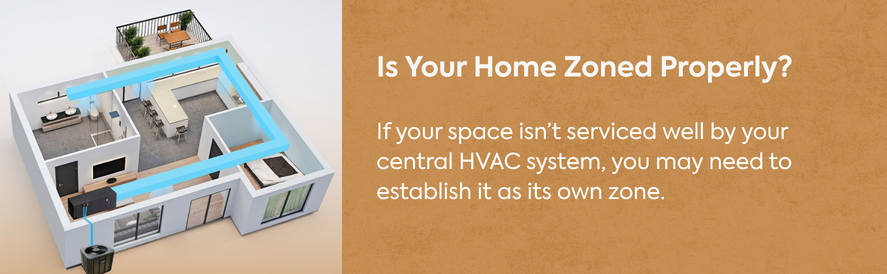
In HVAC, homes are often divided into “zones,” depending on the unique heating and cooling needs. At its simplest, a zone is an area that is served by a single thermostat. In many homes that utilize a central split system, the entire home is a single zone, meaning all rooms are maintained at the same temperature by the same thermostat. However, as you may know, this doesn’t always provide even heating and cooling. For homes with more unique needs, HVAC technicians may help you establish different zones that will utilize different thermostats. Some AC and heating systems come with multi-zone functionality, meaning they can service several different zones. However, you won’t always know that your home needs to be divided into multiple zones when you first install an AC system. In this case, you’ll want to consider additional multi- or single-zone cooling systems for each area.
Where Should I Use a Small Space AC Unit?
There's no one-size-fits-all solution to air conditioning units. Even when you narrow down the scope of all air conditioners to small space or mini air conditioner units, you still have a wide variety to consider. Multiple factors determine what sort of air conditioner you need, such as:
- Where you live: The year-round climate in your region will dictate how robust your cooling needs may be.
- What room you want to cool: The orientation of the room and how cool you want that space will affect how powerful the machine needs to be.
- The size of the space you want to cool: Whether you plan to cool a whole master bedroom or just a small office space, you'll need to consider how well the equipment can disperse the cooler air.
- The quality of your home's insulation: When you have a lower-quality insulation job, you'll want to invest more on the air conditioning to offset the cooled air you’ll lose to the outdoors or to other rooms in the house.
- Your personal preferences on a room's ideal temperature: Be sure to take your body temperature into account. If you typically run cooler than others, you'll need a less powerful machine.
- How much space you have to keep the air conditioner when not in use: If you only need the unit for a part of the year, you need to consider how much storage space you have to keep it in the off-season.
- When in the year you need the AC unit: The amount of time out of the year will influence the efficiency you should aim for from your air conditioner. For frequent use, you'll want something more efficient to avoid wasting money on your electric bill.
- How much space in the room you want to devote to the unit: If you're getting a portable air conditioner, you'll need to consider floor space, whereas a window unit will require the proper window type.
When you're working with a smaller space, the room itself can help to answer a few of these questions. As every home and room is different, you will need to continue asking questions to narrow down what small AC unit would work best for your living space. Determining whether zoned HVAC is right for you can be difficult. These are some of the situations where you might benefit from a small AC unit:
- You live in a small home: This includes a mobile home, a tiny house, or any dwelling with a small footprint.
- You live in an apartment: Some apartments don’t have air conditioning of their own, so adding a small air conditioner could help cool the whole apartment down, especially if it has a studio layout. If your landlord does not allow window AC units, portable AC units could offer the solution you need.
- You have one room in particular that needs more air conditioning than the rest of the home: Living somewhere that deals with rising temperatures at night could benefit from a small AC unit in the bedroom to help you sleep better.
- You plan on using the process of zone cooling: This technique works even if you live in a larger home. The process involves cooling individual rooms, or "zones," rather than the entire space as a whole. You can cool your office and your den but not your hallways and your kitchen. This way, you don't pay to cool your whole house when you spend the majority of your time in select spaces.
- You have a garage that isn't connected to the house: If you have an unconditioned shed or garage where you spend time working, you know how quickly it can get hot in there. Adding a small AC to this space could take the temperature from unbearable to comfortable, which encourages you to get more work done in there.
- You have an RV, camper, or trailer: Sometimes these vehicles have unreliable or ineffective air conditioning. Bringing a portable or personal air conditioner could keep your RV cool wherever you go.
If you live with one of these situations or you have another small space that needs cooling, you're probably in the market for a small air conditioner.
Why to Use a Small Space AC
While a central air system makes heating, cooling, and humidity control of the home simple, you don't need a full system in every living situation. Central air doesn't make sense for every space. The efficiency of any particular HVAC system depends on various factors, which all contribute to determining which system works best for your specific needs. When calculating the potential efficiency of air conditioning for smaller spaces, consider:
- Its size in relation to your home: Smaller spaces require smaller AC solutions.
- What your local climate is like: Moderate climates won't need an extremely powerful system. If you live somewhere with unpredictable or drastic temperature spikes, you'll want something that has the power to cool a small space fast.
- The fuel type used by the system: Some sources of power have more efficiency than others.
- How efficient the machine components are: Different systems operate with a different Energy Efficiency Ratio (EER). This rating measures the efficiency of an air conditioner at 95 degrees Fahrenheit. The higher the ratio, the more efficient the machine. The Seasonal Energy Efficiency Ratio (SEER) also plays a role in determining efficiency, because it measures the machine's efficiency across an entire cooling season rather than a single 95-degree day.
If you're planning on cooling a smaller space and you don't intend to use the AC unit every day, a mini-air conditioner would be an excellent option for you. Some of the benefits of using a small space AC unit include:
- Takes up less space: The smaller the unit, the less space you have to dedicate to it. If you don't have floor space to spare, you can get a window unit. If you don't have any windows that would work with a window AC unit, you can go with a portable floor model. With the variety of units available, you can find a unit that works best for your specific living space.
- Easy to store: If you live in a location that is not hot all year round, you can easily pack these away for the season. You could store them in a closet, garage, or wherever you have space. Once the seasons change and it gets hot again, you can take the unit out from wherever you stored it and easily set it up again.
- Transportable and easy to move: While not true for all small air conditioning units — some window units can weigh between 50 and 80 pounds — you can easily maneuver portable AC units on wheels. This option works well for someone who wants to bring the unit with them on a camping trip or even room to room in their home. Since you can move the unit with ease, you'll get more use out of it.
If all of those benefits sound like the right fit for your situation, then the only thing left to do is decide which unit works best for you.
Pro tip: Be sure to give your seasonal-use AC a good clean before turning it on! Adapt our guide on how to clean your central AC to suit the needs of your portable or window unit.
Small, Single Zone Cooling Solutions
Luckily for you, auxiliary single-zone heating and cooling solutions are often simple to install. You don’t need to worry about installing additional ductwork for many of these options. Rather, if you’re handy with a circular saw, you can have even the most complicated option installed in a matter of hours.
Fans
If your biggest problem is circulation, you might be able to get away with adding a portable or stationary fan to the room in question. Fans come in many different shapes and sizes, including:
- Ceiling fans
- Desk fans
- Table fans
- Pedestal fans
- Tower fans
- Box fans
- Floor fans
- Bladeless fans
- Air curtains
- Stationary fans
Many people will use rotating fans at night to keep the air from getting hot and stuffy. Homeowners might also use ventilation fans to help move conditioned air from one room to another. This is commonly seen for homes that feature fireplaces, wherein a stationary fan is hung in a doorway to move the warm air into other parts of the home.
Remember, fans cool people, not rooms. Most fans aren’t capable of actually conditioning or heating the air. They simply provide ventilation that makes a room more comfortable. If you want actual heating or cooling ability, consider portable fans like the MrBreeze Portable Bladeless Heater and Cooling Fan.
Portable Air
If you need actual cooling power, the next step up from a fan is a portable air unit. You’ve likely seen (or owned) one before. Portable air units are like mini air conditioners, just with a less complicated cooling process. This process looks like:
- Drawing in the surrounding warm air from the room
- Pulling that warm air over a set of coils, which then cools the air. (This is the same process that occurs in your more advanced HVAC setups. The difference is that portable air units use a sealed refrigerant system that requires no extra help from HVAC technicians)
- Releasing the cool, conditioned air back into your room. The process repeats until it has reached your set temperature.
Like other modes of air conditioning, part of the cooling process here will also remove humidity from the room. This creates condensate, which you will need to properly release through the use of a condensate hose or other drain. Portable air conditioning units are also great options for homeowners bound by a strict HOA that doesn’t allow window units.
Portable Air Conditioner Pros
- When HOA restrictions or city ordinances forbid the use of a window AC unit, a portable unit gives you the option to get the air conditioning you need without a sometimes unsightly window unit.
- If you don't have the right window type, you won't be able to install a window AC unit. For a window AC, you need a compatible window that is unblocked by any objects. Sometimes you don't have the proper window space to devote to a small window air conditioner. Portable AC units work with virtually any window situation.
- Portable ACs generally have wheels, which makes them easy to move from room to room. At the end of the season, you will have an easier time storing them for future use. Since they are intended for temporary solutions, this portability works well to streamline taking the system in and out of the space as needed.
- They cool down a small space rather quickly for relief during a particularly hot day.
Portable Air Conditioner Cons
- When it comes to air conditioning for smaller spaces, you should not use a portable air conditioner as a permanent solution. For example, they can work in instances such as when you rent an apartment and can't install a window unit and don't have central air. Another example includes using the portable air conditioner in one room only during an extreme heatwave.
- If you're trying to use a portable air conditioner year-round for one space, you're choosing an extremely inefficient option. In 2023, the Department of Energy finalized a new set of regulations expected to save homeowners money and prevent further environmental issues from energy waste. So make sure you’re buying a newer model to prevent unnecessary energy and monetary loss.
- They take up floor space. While they don't take up much of the light coming through the window, you still cannot operate the window, and you cannot use that floor space or the space in front of it. This hindrance can limit the way you arrange the room you have to cool.
Window Unit
An alternative to a portable air conditioner is a window unit. Typically a bit more efficient and a bit quieter, window units can service a room year-long if installed correctly. They are installed in the window of your room, meaning it will only affect a single room. To be the most effective, window units must be installed correctly and with the appropriate insulation and seal. This type of air conditioner requires a standard-size single or double-hung window to mount on. In these units, the evaporator coil and fan face inward. This coil absorbs the heat from the air in your home, and the fan expels it. The condenser coil and drain face away from the house and release that heat out of the window. The air conditioner takes the hot air from the room, passes it through the evaporator coil where the refrigerant absorbs the heat and releases it through the vents, letting the cold air return to the room.
Window AC Pros
- Window AC units remove humidity from the air in addition to cooling it. This can make a big difference if you live in a humid area. This process occurs because as the window AC removes the warm air, the moisture condenses on the surface of the coil. The outlet pipe then channels the moisture out through the drain pipe.
- Window units typically have more power with a broader range of cooling capabilities. If you live in an area that sees extreme hot spells, you might want to spring for a window unit if you can.
Window AC Cons
- While operating, window AC units make between 60 and 85 decibels. For reference, a vacuum cleaner makes around 75 decibels.
- Some HOAs or city ordinances might forbid window AC use. Their reasoning could be anything from unsightly appearance to illegal blocking of fire escapes.
- You need access to the correct type of window. Once the unit gets installed, you can't open or close that window for the rest of the season.
- Window units can be challenging to install and take down on your own. Some can weigh between 50 and 80 pounds.
Single Zone Ductless Mini Split
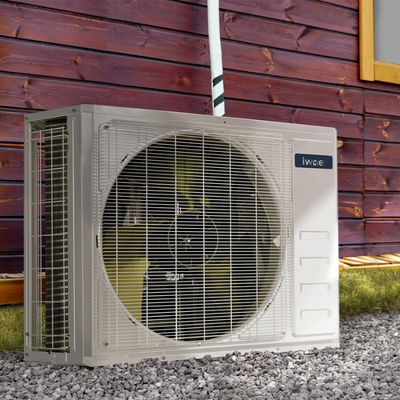
A single zone mini split is a more permanent solution than a portable air unit or a window unit, and much more efficient to boot, especially if you’re looking at a heat pump model. The ductless nature of a mini split makes these units versatile: all you need is a wall to install the air handler on and a place for the outdoor condenser. Generally speaking, they’re less renter-friendly than some other options because they require you to cut through the exterior walls during installation. Still, they’re ideal for landlords to install in rental properties due to their relatively low cost and high efficiency ratings. There are even do-it-yourself options like MrCool’s DIY Select or the IWAE’s TruInverter Mini Split Heat Pump.
Ductless Mini Split Pros
- Removes humidity in addition to cooling the air
- Multiple functions and features from cooling to heating
- Generally quieter than alternative heating and cooling options
- Highly energy efficient
- Can handle year-round heating and cooling, even in extreme temperatures with some models
Ductless Mini Split Cons
- More expensive than other single-zone options
- Requires more complex installation that may require an HVAC technician
- Permanent fixture once installed
Frequently Asked Questions About Single Zone Cooling
What is zoned HVAC?
Multi-zone HVAC is a system that allows you to break your home down into different zones with unique temperature control. For example, the upstairs may be set as one zone and the downstairs another. Zoned HVAC is useful for homes that have high temperature disparity between different rooms.
Are mini splits a form of zoned HVAC?
Mini splits can be a form of zoned HVAC. Single zone mini splits can be added to difficult to heat and cool rooms, establishing them as a unique zone. Mini splits can also come in multi-zone varieties, with some systems like the MrCool DIY Multi Zone Mini Split allowing for as many as six unique zones.
How big are HVAC zones?
There is no definitive size of what an HVAC zone should be.
Get Single Zone Heating and Cooling from IWAE
If you have a small, stubborn space in your home that makes climate control harder than winning the lottery, stop struggling and get an HVAC unit fitted for small spaces. For durability, efficiency, and price point, we recommend investing in a ductless mini split, but we recognize that not everyone’s living situation can accommodate such a permanent fixture. If you need help selecting the best AC solution, give our team of whole home experts a call. With a little information about the space you want to heat or cool, they will hook you up with an effective, efficient unit in no time.