
If you’re like me, the most thought you’ve ever given to indoor air quality only goes as far as changing my air filters and opening the windows to let in some fresh air. A lot of us overlook just how important it is to create a safe and healthy indoor atmosphere. At IWAE, we’ve spoken at length about steps you can take to improve your air quality, but a lot of that is preventative guesswork. We change air filters, clean vents, and service our ductwork just in case our air quality is trending on the poorer side, but I always wondered if there was a way to more accurately gauge the air quality.
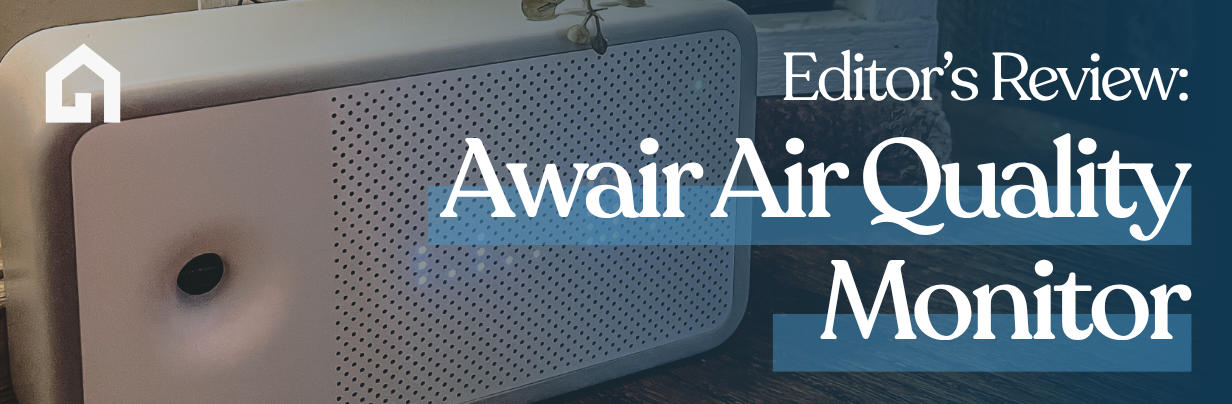
Recently, I was given the opportunity to test AWAIR’s Element Indoor Air Quality Monitor in my home. Overall, I had a positive experience, and my awareness of my indoor air quality is much higher now than it was before. Are there aspects of the interface and operation that I would change? Yes. For the price point, I wish the app would provide more in-depth readings and explanations, but on the whole, this is a great appliance for raising awareness and promoting healthier behaviors at home.
Small, Compact, and Non-Intrusive
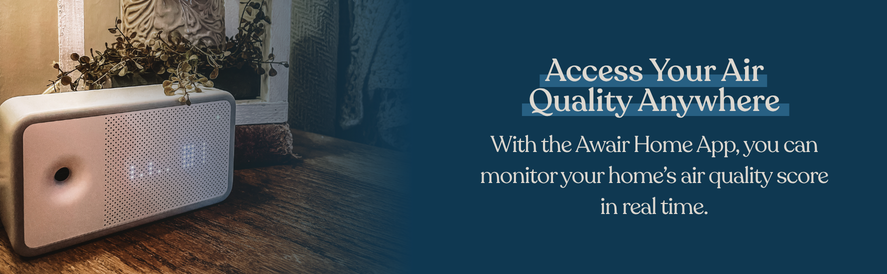
The monitor itself is as small as a standard alarm clock, if not a smidgen smaller. You can easily find room for it on a nightstand, bookshelf, or coffee table. Plus, it’s an aesthetic chameleon. While the design is chic, it easily blends into your room decor. I kept my sample on a side table in my living room, and I was shocked at the range it had. It was even able to sense fluctuations in the air quality in my kitchen (more on that later!). One thing to keep in mind: the range is great, but you still need to make sure that the monitor is placed where it has easy access to the air in the room for a more accurate reading.

Intuitive App, Limited Readings
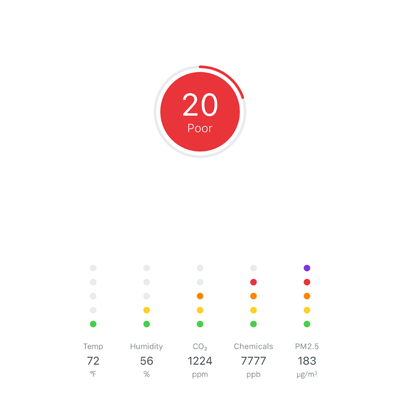
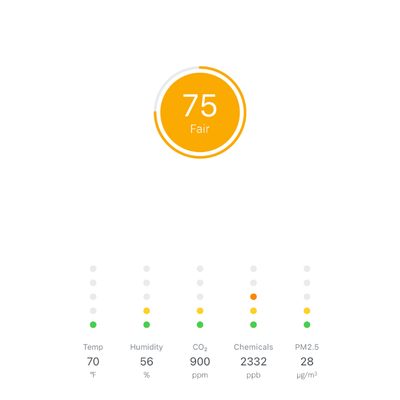
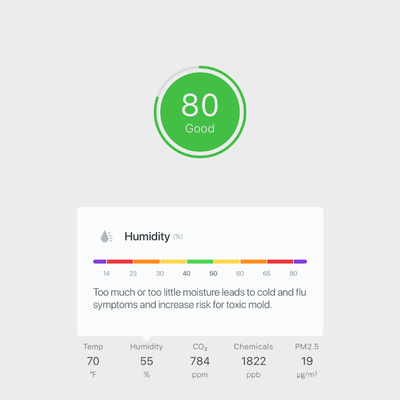
The app truly expanded my understanding of indoor air quality. Before, I only thought about how much carbon monoxide, pollen, and dust lingered in my home. The app is more extensive than this, displaying readings for the temperature, humidity level, carbon dioxide, total VOCs, and PM2.5 (particulate matter). For each, the app interface displays a color-coded stack of dots that increase in height and color to let you know how your air quality is impacted. Green dots indicate that the air quality is good, yellow is fair, and red is poor. The more dots you see, the more of that particulate the AWAIR Element Indoor Air Quality Monitor senses.
On looks alone, the app is intuitive and easy to follow. I also loved how I could check my IAQ from anywhere. If I were concerned or curious about my air quality while at work, all I had to do was whip out my phone and check. Still, there are some downsides to the app, particularly where alerts are concerned. Maybe I didn’t set up my app correctly (it happens to us all), but I found myself wishing that the app would send push alerts when the air quality got worse. There was one instance in particular where I wish this had happened.
Carbon Dioxide Monitoring
In hindsight, this experience feels harrowing. We were in the middle of a burst of winter weather, and I’d just come home to discover a chill in my home. Like always, I went to my kitchen and turned on my ventless gas wall heater. I’ve never had issues with my heater. I’ve mindlessly turned it on just like this hundreds of times. As I was cooking dinner this day, I started to develop a headache. If our content team hadn’t been reworking content about overexposure to carbon dioxide, I might have written this off, but the topic was fresh in my mind, so I pulled out my phone and checked the AWAIR App. Sure enough, the carbon dioxide levels in my home were significantly higher than usual. I immediately turned off the wall heater and opened a window, then watched my air quality improve on the app in real time.
As much as I was amazed by the readings, I couldn’t help but think about how I would have never connected the dots if I didn’t work where I work. The app did not alert me to the dangerous levels of carbon dioxide in my home. This is a major point of improvement I see for future developments.
Great for Anyone with Autoimmune Conditions
While I do think that improvements could be made to make the app more “active,” I can see clear benefits for anyone who needs to engage in preventative air quality control. This monitor could be a lifesaver for anyone with an autoimmune condition. Every condition is different, and triggers are different for everyone as well, but one common piece that links these conditions together is the importance of maintaining a clean environment. Environmental triggers, like weather fluctuations, mold and dust, and airborne viral illnesses, can quickly lead to flares. For those who don’t know, a flare is what we call increased periods of disease activity that will often require medical attention. This could mean increased pain, fatigue, fever, and even hospitalization for more serious cases. This is all to say that preventing flares is critical for people with autoimmune conditions. Being able to observe changes in air quality in real-time is an absolute game-changer for people whose livelihoods depend on controlled, clean environments.
This also applies to your animals! We often consider how our pets contribute to poor indoor air quality (I’m looking at you, pet dander), but we often forget that our pets are affected by poor air quality just like we are. This air monitor is a step in the right direction to protecting the lungs of everyone who lives in your home—you, your family, and your pets.
Can the AWAIR Monitor Show the Impact of Indoor Pets?
I have a gorgeous corgi in my home, but as much as I adore her, I know that I have to work a little harder to keep my home clean because of her. I already know that homes with indoor pets need to change air filters more often than homes without them, but I wanted to see if the AWAIR Element Indoor Air Quality Monitor could show me how much she impacts my indoor air quality. Unfortunately, the readings are not so in-depth that they could show me how much of my indoor air pollution came from pet dander versus other VOCs. This is another point of improvement I’d like to see: pinpointed data on the factors that are actually impacting my indoor air quality.
I know that every case is different, but it would be helpful to provide information in the app on common causes of some of these air pollutants. Providing this information would help homeowners make informed decisions about what to add or subtract from their homes.
A Great Start to Improving Indoor Air Quality
Overall, I think the AWAIR Element Indoor Air Quality Monitor is a great start for anyone looking to be more serious about their IAQ. It gives you a blanket air quality score with some breakdowns of specific pollutant groups that are present in the air, but it does not give out enough details for informed actions in many cases, nor does it explain what could be the source of these pollutants. For a better user experience, I would love to see updates to the app with these improvements! These improvements would make the product well worth its price point.