
Key Points
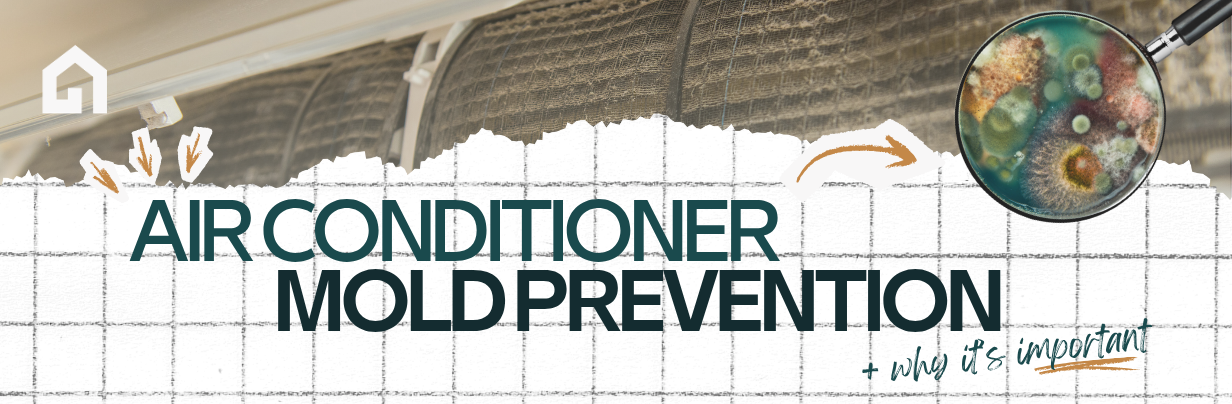
- Mold grows in dark, damp spaces and in HVAC systems with dirty filters and ductwork.
- Smell is your greatest asset for mold detection until it’s a visible colony. Different types of mold give off unique odors.
- Cleaning mold is difficult in large areas or on non-porous surfaces. Call in the professionals for areas larger than 3 ft x 3 ft.
- Some air purifiers & plants can remove mold from the air, but you should still treat the source.
Imagine this: Summer arrives after a wet, chilly spring. Your seasonal allergies are finally starting to calm down. A heatwave is about to roll in, so you turn on your AC—it’s important to test it out before the weather hits. Your system kicks on. You hold your hand over the vents and feel cool air pouring through them. As you take in a deep, calming breath, an unpleasant scent hits your nostrils. You know, turning on the heater in winter often smells like burning dust for its first cycle, but that isn’t what this smells like. It’s… musty. Earthy? Stale? Maybe even a little sweet or cheesy. You find yourself coughing and cursing your allergies, but the fact is that any of these stenches potentially indicates that mold has grown in your HVAC system.
Before you decide to cut your losses and swap out the whole system for something new, take a step back. Mold can be cleaned out of almost anything with the right tools and knowledge, and mold prevention strategies deter growth inside your HVAC system over time. Keep your family safe when mold has entered your cooling system with IWAE’s mold prevention guide.
Where Does Mold Grow in Your Home?
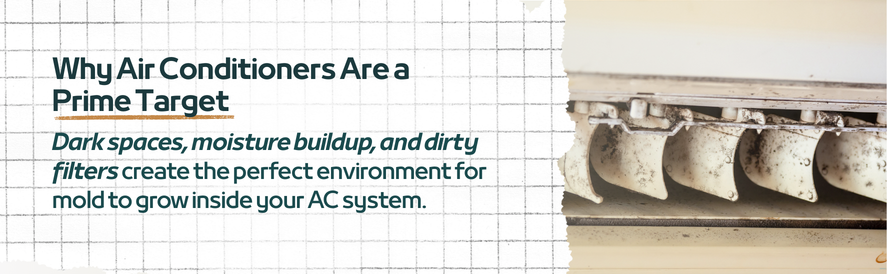
Mold does not grow in a vacuum. Like every other form of life, mold requires the right conditions to survive and thrive. The best way to keep mold from forming in your home's air handling unit is to minimize those conditions. There are a few different factors that line up between your HVAC system and mold’s ideal environment, so be sure to check the following areas if you suspect mold is forming in your air handler:
- Dirty Air Filters & Ducts
- Areas with Moisture
- Darkness
Dirty Filters and Ducts
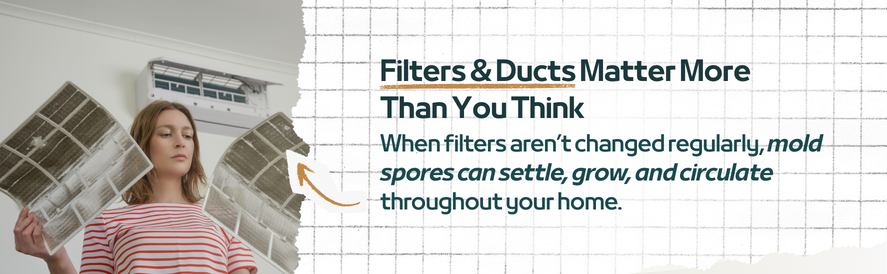
Like any living creature, mold spores migrate through the environment until they either die or find a suitable location to grow and reproduce. These spores only have a chance to grow if you give them enough time. This means that if you regularly clear your air filters and air ducts, mold will have less time to sit in your system and less chance to spread.
Areas with Moisture
Mold loves moisture. Most air handlers tend to build up condensation during normal operation, and that moisture allows mold to spread. It’s crucial to perform regular checks, ensuring the drain connections on your air handler aren't clogged. Otherwise, condensation collects in areas it shouldn't. Winning the moisture war goes a long way toward keeping your home mold-free.
In the Dark
Another environment that mold thrives in is darkness. Air handlers also tend to live in dark spaces like attics, closets, and crawl spaces. There is a healthy amount of discourse within the industry about the efficacy of this placement, and some professionals suggest preventing mold growth by investing in an ultraviolet light that purifies the air as it moves through the system. If you lean on the side of skepticism or your trusted professional is against UV lights, focusing on taking care of dirt and moisture consistently over time should be enough to keep your air clean and mold growth at a minimum.
How to Find Mold in Your Home
The easiest way to find mold in your home before it’s easily visible is by using your sense of smell. Molds come in a variety of colors and textures, but did you know that different types of mold have different scent profiles? Those smells can change depending on what stage of life the mold is currently in! Be careful, though– just because you can’t smell mold doesn’t mean it isn’t there and dangerous. In fact, mold is often at its most hazardous when its scent is the least potent: during its reproductive cycle.
Black mold is one of the most worrisome types that can grow in your home, but its unique smell is unmistakable. A strong, pungent musty odor that is reminiscent of damp soil or rotting wood is its call sign, a stink that’s most commonly found in hyper-moist rooms like bathrooms and basements. Black mold exposure mimics allergies and the flu, causing sneezing, coughing, nasal congestion, postnasal dripping, and red eyes. If left unchecked, black mold symptoms worsen into wheezing, shortness of breath, and chest tightness. Those with an allergic reaction can end up in the hospital or worse, so you shouldn’t ignore this silent threat.
Mold vs Mildew: What’s the Difference?
Mold and mildew are both fungi that develop in conditions of excess moisture, though there are a handful of differences that distinguish them from one another. Mold penetrates the surface to seep into porous materials, whereas mildew remains on the surface and grows outward. The smell of mildew is more akin to wet towels that were left in the washer too long. And, while both can pose health risks, the dangers from mold far outweigh those of mildew.
How to Clean Mold in Your Air Conditioner
Handling small amounts of surface-level mold in your HVAC system is a task any homeowner can tackle. Be sure to use safety gear such as an N-95 mask, gloves, and goggles to protect yourself from the harmful effects of mold when attempting to clean your vents or air handler. These tools are not optional, as mold will release spores when disturbed. Use a vacuum cleaner that has a HEPA filter to avoid spreading spores during their removal, then wipe down the area with a microfiber cloth and an EPA-registered mold cleaner or disinfectant.
The best way to get rid of mold will depend on the amount. The EPA has a finite threshold where they state the problem switches over from a DIY cleaning task to a situation where you should call a professional. If you’re cleaning mold in your residence or commercial building, any amount of mold less than 10 square feet is feasible to handle on your own. Once the growth has expanded to be more than that amount, it’s time to call in the big guns.
Always, Sometimes, Never: Common Mold-Cleaning Myths
“Bleach can kill mold in your HVAC system.”
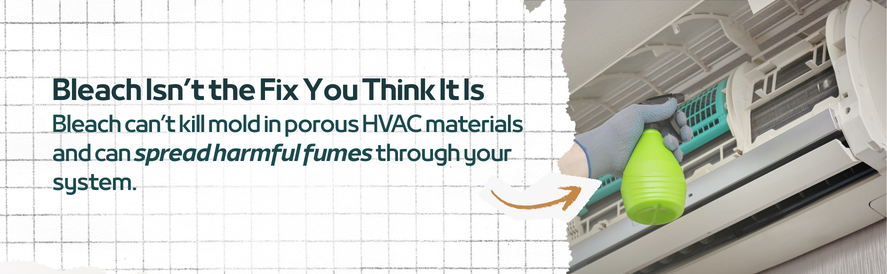
Never. Bleach cannot kill mold that’s developed in the porous surfaces of your HVAC system. If you try to use it for cleaning your vents, you’ll spread harmful chemicals through the home when you cycle on the system. This applies to bleach wipes like Clorox, too. Avoid using bleach or bleach wipes when cleaning mold from your HVAC system.
“You can paint over mold.”
Never. You should not paint over mold. Paint will not kill mold. Using paint on mold won’t prevent it from growing and spreading; it will onlyhide the evidence.
“Alcohol kills mold.”
Sometimes. The effectiveness of alcohol varies by the concentration of the alcohol, the type of mold, the surface it’s growing on, and how long the alcohol can sit in direct contact with the mold. Alcohol will not kill mold in porous surfaces, so this is not a long-term solution.
“Hydrogen peroxide kills mold.”
Sometimes. Similar to alcohol, hydrogen peroxide is a good solution for small amounts of mold on non-porous surfaces. Be sure to avoid using hydrogen peroxide in tandem with vinegar, as this creates peracetic acid, a known, strong irritant on the eyes, skin, and respiratory tract.
“White vinegar kills mold.”
Sometimes. In a pinch, use white vinegar to knock out mold on surfaces like glass, porcelain, plastic, or stainless steel. It is ineffective or harmful to materials such as wood, granite, and marble. You still need to call in a professional to handle any mold in an area of 10 square feet or larger.
Air Purifiers & More Ways to Combat Mold
After you’ve done the hard part of removing mold colonies within your home or HVAC system, it’s time to plan for the future. Mitigating the level of moisture will go a long way in minimizing the likelihood of mold buildup again. With air purifiers from Austin Air, you can breathe easy. Austin Air has a mold recovery home bundle they suggest for the bounce back period after a mold infestation or water damage. Use two bedroom machines, one HealthMate, and one HealthMate Junior to capture mold spores with 60 square feet of medical-grade HEPA filtration per unit.
Did you know that some plants remove mold spores from your home? From bamboo palms to snake and spider plants, some plants do more than remove excess moisture from the air: they actually purify pollutants directly during photosynthesis. While you’ll still need to clear out any visible mold first, these kinds of plants are a great way to add some brightness to your space while adding another layer of functional filtration to the air inside your home.
Frequently Asked Questions About AC Mold Prevention
Why does mold grow in AC units?
Mold thrives in dark, damp spaces like AC ductwork.
How do I clean mold from my AC?
For mold that is deep in your ductwork or that has spread larger than a 3'x3' are, it's best to call in a professional. If you are going to tackle the mold yourself, make sure you wear a safety mask and gloves to protect yourself from the spores. Arm yourself with mold cleaner or disinfectant. Do not use bleach.
Can AC mold make you sick?
Yes, mold in your AC can make you sick, espeically if you're sensitive to mold spores. Common mold exposure symptoms include sneezing, coughing, congestion, and respiratory irritation.
Keep Your HVAC System Free of Mold with IWAE
From coordinating a professional cleaning of your HVAC system to helping you find a new system when you’re ready for a fresh, efficient reset, IWAE is here to help. Regular maintenance and servicing, like replacing the air filter in your heating and cooling system, can prevent excess moisture buildup and mold growth. If you have any additional questions or need support with your HVAC system, the customer service team at IWAE is just a message away.