
Key Points
- Using a generator can be dangerous. Proper safety is crucial for avoiding carbon monoxide poisoning, electrical shocks, fire hazards, and more.
- Generator safety includes choosing the right equipment, picking a safe installation location, and careful operation.
- Generators should be maintained and exercised regularly. If you find damage or unfixable issues during servicing, replace the unit or part.
Being able to keep the lights on when the grid goes down isn’t a pipe dream anymore. Backup generators have been around in some shape or form for more than 200 years! Technological advancements over the decades have added new functions and better efficiency to modern-day generators, making them more accessible and powerful than ever before. These changes have led to more safety nets, but not every problem can be stopped by the manufacturer. Some precautions to ensure safe operation are the responsibility of the installer and homeowner.
When you hear the words “generator safety,” what comes to mind? For some of us, it might be nothing more than not sticking your fingers into the machinery. Hint: You definitely shouldn’t do that. Others may think about keeping fuel and oil tanks filled. Hint: That’s a great idea, but you’ll need to be a bit more thorough. Here at IWAE, we take generator safety seriously. Having access to a steady power supply in the event of an emergency or travel is a quality-of-life inclusion that you shouldn’t live without, regardless of your situation. Grab a drink, take a seat, and learn the ins and outs of safe generator installation and operation so your home is protected in every season.
Is It Dangerous to Use a Generator?
Let’s be clear: there are absolutely some risk factors to keep in mind when using a generator. Carbon monoxide buildup, electrical hazards, and fire dangers are all issues that have preventable safety measures. CO gas is a normal byproduct of fossil fuel combustion that can pose a risk to your health, but that doesn’t mean it’s guaranteed to cause concerns for you and your family. We go into great detail about this particular hazard in our guide to carbon monoxide safety in your home, but what about a generator that sits outside your hallowed halls? With our step-by-step safety suggestions, you can feel confident that your generator is set up for success.
Pro tip: If your generator doesn’t already include a CO detector, you can buy and install plug-in and battery-operated alarms to monitor your generator and alert you to any CO buildup!
Safely Operating a Generator
Having a source of reliable backup power is crucial for the long-term safety and security of your home during inclement weather, natural disasters, and more. If you’re unsure where to start, IWAE has the breakdown of factors to focus on to use your generator safely:
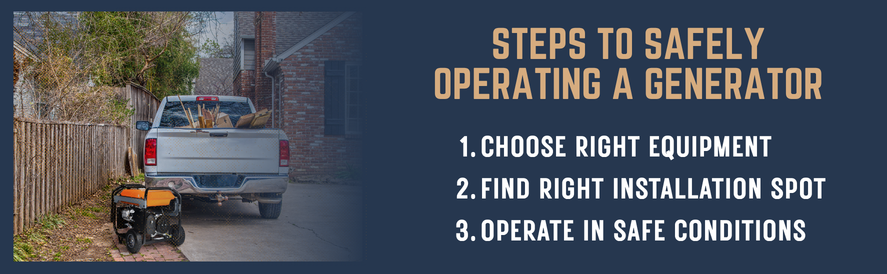
Step 1: Choose the Right Equipment
After you’ve found the perfect generator for your home, it’s time to acquire the generator accessories you’ll need for safe installation and use. Be sure to verify what accessories, if any, come with your purchase. The owner’s manual will clarify if there are sizing requirements or other unique considerations to take into account. Some manufacturers will even list compatible accessories for their products in manuals! Regardless of whether or not your unit comes with the peripherals, the following parts are crucial for safe generator operation:
- Grounding cords: Choose an option that accounts for the wattage of your generators
- Transfer switch: Manual and automatic options are available to suit a variety of needs
- Fuel & oil: Ensure you have the right kind of oil and fuel as listed in your owner’s manual
Step 2: Find the Right Spot for Installation
Picking where to set up your generator is just as important for safe operation over time. First thoughts may leave you wanting to keep your generator close by so it’s easy to turn on in an emergency, but there are more factors to consider than convenience. To run your generator safely, be sure to keep the following guidance in mind when selecting your setup location:
- Make sure generators are at least 20 ft from your home
- Ensure there is proper ventilation space. Your installation manual will give any specific distances, but the average is 3 to 4 feet of unobstructed space on all sides
- Make sure exhaust fumes are directed away from your home
- Do not place the generator near windows
- Do not plug into a wall outlet to avoid dangerous backfeeding
Step 3: Operate in Safe Conditions
Now that you have your generator outfitted with all the necessary equipment and installed in a smart location, it’s time to learn about safe operation. Some of the safety precautions we’ll go over are more generalized, but every one will be crucial for the safety of you and your generator:
- Maintenance and cleaning should be done when the unit is turned off, unplugged, and fully cooled down if it’s been used recently
- Do not stick your hands or foreign objects into the unit while it’s operational
- Do not operate your generator in the elements or when wet
- Only operate in open-air spaces. Closed and partially enclosed spaces pose a CO risk
- Keep children and troublesome people away from the generator, especially while it’s actively in use
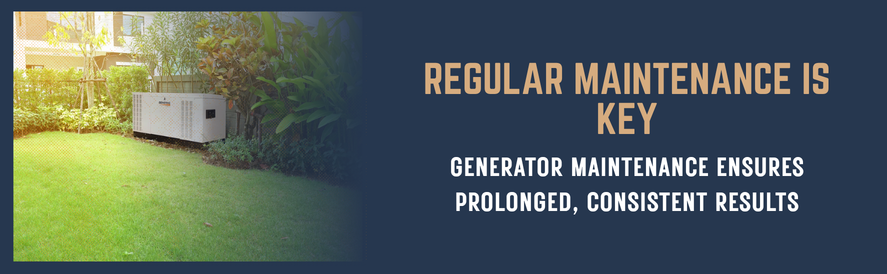
Regular Maintenance Ensures Generator Safety
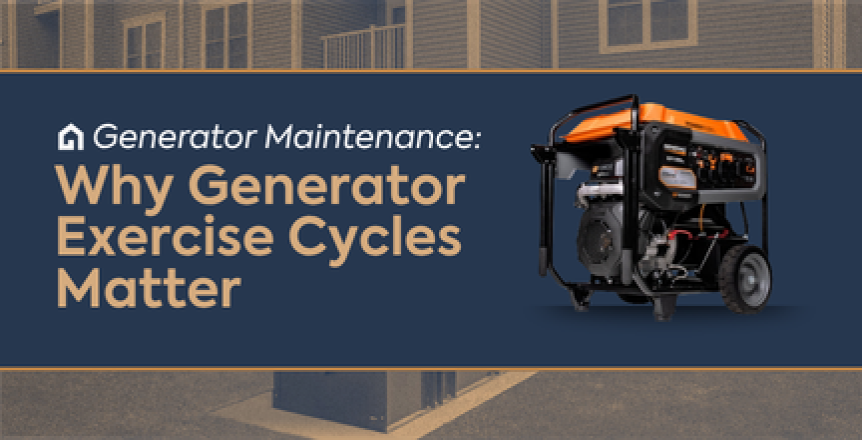
Just like with any technology, it’s important to keep your equipment in good shape. Generator exercise cycling matters, but so does the standard cleaning and maintenance efforts you’d expect to do for any hardware.
- Keep debris and dirt from building up around, on, or in the generator
- Run any cleaning and test cycles at the interval suggested in your owner’s manual
- Make sure any cords and wires are in good condition with no signs of fraying or damage
- Verify adequate fuel and oil levels before any cycling
Replace Outdated Generators
At the end of the day, any technology is only useful when it’s able to handle its responsibilities safely. Antiquated generators can be fun to have as a reminder of how far the technology has come, but operating a system that doesn’t have the right safety features isn’t worth the risk, especially when there are so many portable, permanent, and powerful generators available on the market today.
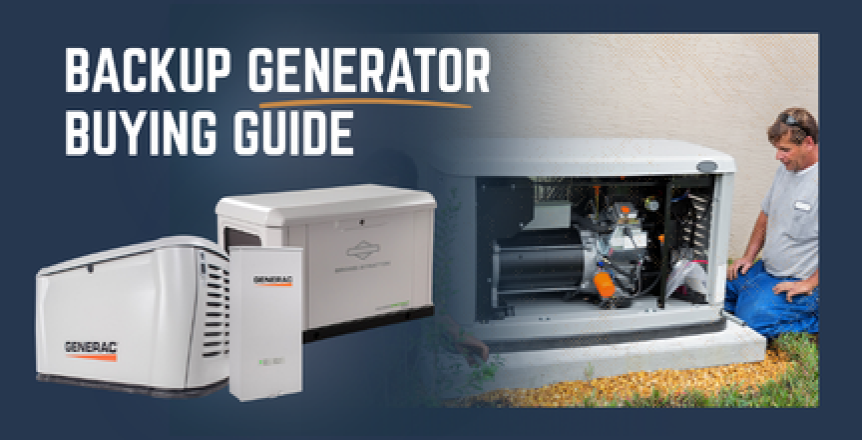
For a permanent power backup for your home, try the Briggs & Stratton Power Protect Series standby generator. These units are UL-listed for safety and even include their own Eco-Cise weekly test mode that ensures the system is running smoothly over time.
Options like the CARB-compliant Generac GB1000 power station are effortlessly portable and safe. The lightweight design and convenient handle make it easy to take with you anywhere life takes you, letting you keep the essentials powered in the wilderness, at a block party, or in the backyard.
For a better balance of power and maneuverability, the Generac GP9500E portable generator gives you what you need. You’ll enjoy hours of constant use using any of the three compatible fuel options: natural gas, liquid propane, or gasoline. The intelligent construction is designed for durability, using the never-flat wheels and handle to make maneuvering simple.
Use Your Generator Safely with IWAE
Enjoying reliable operation from your generator doesn’t have to be a difficult task. Whether you’re using your generator as a backup power source for your home, as an on-the-go electricity supply while you’re camping or tailgating, or at any other job or recreation site that doesn’t offer direct access to the grid, following the safety steps outlined in this article is crucial for safe and long-lasting operation. If you don’t follow proper safety precautions when using your generator, you and those around you are immediately at risk. More than just leaving your home subject to inclement weather, using your generator in unsafe conditions can lead to serious consequences for you, your family, your neighbors, any electricians working on your home, and any number of people nearby during an issue. Don’t leave those you love the most at risk when IWAE’s outline to safe generator operation makes it easy to use your backup without worry. If you have any questions about generator safety, don’t hesitate to reach out to our team. They’ll calm your concerns, learn your needs, and point you in the direction of any hardware you need to keep your generator running safely and effectively for years.