
Key Points
- Routine maintenance for generators includes oil changes, air filter servicing, battery swaps, physical damage inspections, and exercising the unit.
- Maintenance should be done annually on generators. Check the fuel level before you intend to turn it on and regularly during extended use.
Severe weather can appear out of nowhere, but that doesn’t mean you can’t be prepared! Whether you’re in an area along the coast that’s subject to tidal trouble or in the heart of Tornado Alley, having a generator is the difference between minutes or weeks without power post-disaster. Not every situation is life or death, but that doesn’t discount its importance. Camping without a portable generator can lead to some worrisome situations, especially if you’re used to having on-the-go power. There are enough types of generators to easily find an option to provide power in whatever situation you find yourself in. If you haven’t already bought an emergency generator, we recommend doing so ASAP! But you can’t just buy a generator and then wait for the right time to use it. Proper generator maintenance is key to ensuring it will be ready to use when you’re in a pinch. Sure, you might be good about making sure your generator has enough fuel, but that’s hardly all the upkeep your unit needs. Generators need exercise. Don’t worry, you don’t need to take it on walks or force it to do jumping jacks. Keep reading to learn more about generator exercise cycles and IWAE’s tips for reliable generator performance.
How Often Should You Perform Maintenance On Your Generator?
Without preventative maintenance, your home could be at risk the next time there’s an outage. You should ideally perform maintenance on your generator annually, though some backup power units require more frequent servicing. For reference:
- Standby generators often utilize an automatic weekly or monthly exercise cycle. This keeps both the engine and electrical components in good working order
- Portable generators require manual exercises. You exercise your generator by running it periodically under load. This prevents mechanical and fuel issues from developing due to disuse
Pro Tip: You should check the remaining fuel in any generator regularly. If a storm is coming later in the week, you should check fuel levels well before it rolls in.
Generator Maintenance Checklist
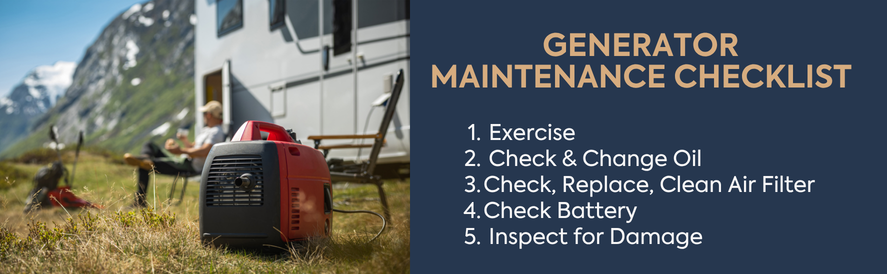
Not all generators have the same needs, but the steps for routine maintenance overlap heavily for the vast majority of units. Every year, be sure to:
- Exercise your generator
- Check & change the oil
- Check, replace, or clean the air filter
- Check the battery health
- Inspect for physical damage
Exercising Your Generator
If you’re unfamiliar with what exercise testing is, it’s a process that uses a short run-time with a configurable schedule. This allows the generator to check on the internals after a self-start, verifying that the hardware can continue to perform as expected. For generators that support an adjustable exercise testing schedule, the most common frequency options are weekly, biweekly, or monthly. Some newer generators come with the option to choose the duration of scheduled exercise tests, while some are locked into a specific length. Options like the Generac Guardian series fall in this non-customizable group, with their preset 5-minute duration unable to be adjusted.
Pro tip: Some generators won’t require an exercise test at their regularly scheduled interval if the generator has been used recently! Be sure to check your owner’s manual to learn the ins and outs of your specific unit.
Check & Change the Oil in Your Generator
Knowing when to change the oil and oil filter isn’t an exact science, but that doesn’t mean there aren’t a small handful of factors to keep in mind when determining whether or not it’s time to take the plunge. Everything from run hours and time intervals to the environment around the generator plays a role in how your unit uses oil. Climates with extreme temperatures in either direction are harsher on a generator, meaning oil changes will be more frequent to offset how much harder it is to run a cycle in those conditions. Your owner’s manual will explain the specifics of what your generator requires, but most experts suggest a change every 100 to 200 hours of run time since the previous oil change.
Clean or Replace the Generator Air Filter
Just like your heating and cooling hardware, generators have an integrated air filter that keeps the system supplied with clean air during operation. Any pollutants or contaminants that aren’t caught by the filter can enter other parts of the system and cause problems, so keeping the air filter in good condition is crucial for sustained operation.
You’ll find the process of checking the air filter similar to your HVAC system. If the filter is full, clean or replace the part as necessary for the specific type of filter used in your generator. Your owner’s manual will have all the information you need about what type, size, and material of filter is compatible with your unit.
Using the oil filter as a frame of reference for timing, most experts suggest cleaning or replacing your air filter every other time you swap out the oil filter. Since the average use case will have an oil filter swapped out every 200 run hours, the air filter should be inspected roughly every 400 run hours on average. In areas with harsh outdoor conditions, a high allergen count, or any other factors that would lead to your oil filter being changed every 100 hours, it’s worth conducting the air filter inspection every 200 hours.
Check the Battery
In many generators, the unit itself will give you a visual indicator that it’s time for a yearly battery check. After you remove the battery from the unit, do a visual review to look for any damage or signs of corrosion that would require a replacement. If the battery is in good physical condition, the next step is to test the voltage. Generally speaking, generator batteries last between 3 and 5 years, depending on their use case.
Pro tip: Be sure to reset any check battery reminders or warnings on the generator after performing the necessary maintenance! This keeps your reminder on a set schedule.
Visual Inspection for Damage
Generally speaking, there are a few things to look out for when doing a visual inspection of your generator:
- Signs of water intrusion: Checking for water intrusion should be done annually, though it’s smart to give your generator a once-over after any period of heavy rainfall or flooding
- Leaks in the fuel system: Look for kinks, cracks, or abrasions, identify any wet spots, smell for fumes, and listen for hissing; clean any suspected leak areas, then apply non-corrosive gas leak detection fluid and watch for bubbles
- Indicators of corrosion: Every metal component from the frame and brackets to the fuel system should be reviewed. Any parts with rust or corrosion should be replaced
- Spark plug health: Using a wire feeler gauge, inspect removed spark plugs after the unit has cooled completely. Replace if the spark plug gap indicates a replacement is needed
Guarantee Your Generator Is in Good Shape with IWAE
A generator is a worthwhile safety net that protects you during a power outage or anywhere there isn’t already electricity, but having a backup power system is only helpful when it’s operational. Without regular maintenance and exercise testing, your fallback could fail when you need it the most. Just like annual HVAC maintenance is important, regular servicing for your generator is another part of the equation to keeping conditions comfortable in any situation. If you’re struggling to keep up with generator maintenance, or you’d like to call in a professional to handle the task, simply reach out to the team at IWAE. We’ll connect you with the right resources to get your generator and any other HVAC hardware in great shape so you won’t have to worry when severe weather comes your way.