


Key Points
- RV AC solutions are more akin to home HVAC than standard vehicle air conditioning.
- RV climate control options can cater to your vehicle’s layout. Units can be located under the floor, in outdoor compartments or indoor cabinets, on the roof, or mounted to the wall or window.
- Factors such as the square footage, number of unique zones, and whether you want a ducted or ductless system will influence which AC works best for your RV.
Let's be real: most of us have experienced the awful discomfort of a long drive in the height of summer without working AC. The sun beats down and bakes the inside of the vehicle, and the only respite comes from the toasty cross breeze when the windows roll down. If the windows wouldn't budge or traffic left you with stagnant cabin air, a five-minute drive could leave you sweating as you came straight from the sauna. For many RV owners, your vehicle is your home. That means when the AC is broken or ineffective, you don't get a break from the heat once the drive is over. Your car can get taken to the mechanic and fixed, but motorhome AC needs aren't quite the same. RV AC systems function more like traditional HVAC equipment than a normal vehicle’s air conditioning. If you’re looking to get into the RV game, make sure you familiarize yourself with the ins and outs of RV air conditioning systems before you choose your vehicle. Different recreational vehicles have different AC needs. Keep reading for IWAE’s definitive guide on RV AC.
What Is RV AC?
Like we said, RV AC is a bit different from the AC you usually find in a car. The similarities between car and RV air conditioning begin and end at using a refrigerant cycle and a compressor to cool the vehicle’s cabin. From there, the components and operations are quite different. Air conditioning for an RV is more similar to what you’d find in a home: it can rely on ducted or ductless airflow, service one or multiple zones, and must be properly sized for the square footage of the cooled space.
Within the RV AC category, there are several different types of systems to choose from. Depending on your particular situation, you might use any of the following motorhome heating and cooling systems:
- Basement RV Air Conditioners: Units mounted under the floor or in a lower compartment.
- Evaporator Cooler RV Air Conditioners (aka Swamp Coolers): Units that rely on water evaporation to cool the air instead of refrigerant.
- Mini Split RV Air Conditioners: Systems that rely on an outdoor compressor and indoor air handling system to circulate conditioned air.
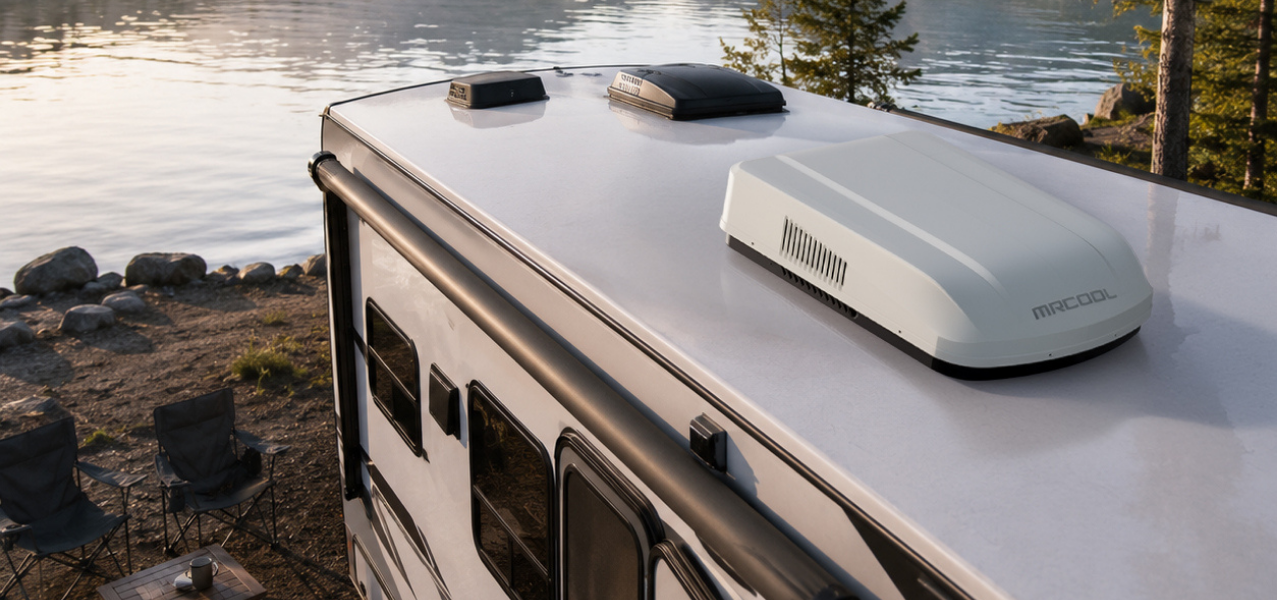
- Rooftop RV Air Conditioners: Units mounted to the roof of the RV.
- Under-Bench RV Air Conditioners: Units mounted in storage or cabinets.
- Wall-Mounted RV Air Conditioners: Units that are mounted to an RV wall, usually at a comfortable height.
- Window-Mounted RV Air Conditioners: Similar to residential window units, these air conditioners are mounted in the window or other side opening in an RV.
RV AC Components
RV air conditioning doesn’t have nearly as many components as your standard residential heating and cooling system, but there are still a few key parts you should know about.
- Outdoor Unit: This component can be found on the roof, side, or bottom of the RV, depending on what type of system you buy. It contains all of the elements that actually heat or cool the air. This includes condenser coils, fans, and refrigerants.
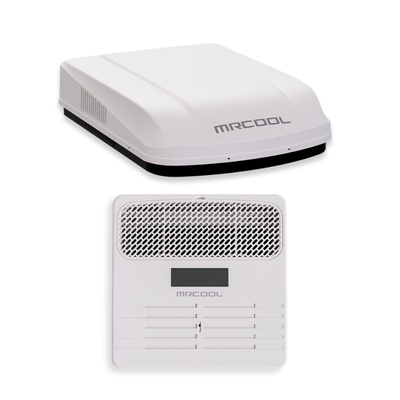
- Air Distribution Box (ADB): Think of the air distribution box as something like a cross between an indoor air handler and a vent. They’re usually installed on the ceiling inside of the living space in your RV and include an air filter.
- Thermostat: Like the heating and cooling system in your home, your RV AC system uses a thermostat to monitor and control the temperature inside the cabin. RV thermostats range from basic to smart, programmable options. Whatever you choose, make sure it’s compatible with the rest of your system.
Like other air conditioning units, RV AC relies on refrigerant, evaporator coils, compressors, condenser coils, fans, and filters to process and cool the air in your RV.
RV AC Sizing
In order to correctly size your RV AC system, you’ll need to know a few things:
- What is the square footage of your RV interior?
- How many zones are in your RV?
As a general rule of thumb, the larger the interior you want to cool or heat, the more BTUs you’ll need from your RV HVAC system. Of course, exceptions exist. If you have a large enough motorhome, you may consider separating the interior into multiple zones to heat and cool each one individually. The following table can help you figure out how many BTUs you need for your RV AC:
|
Size |
Area/Length |
BTUs Needed |
|
Small |
Under 200 sq ft or < 24 ft. long |
8,000 - 13,500 |
|
Mid-Size |
24 - 30 ft. long |
13,500 - 15,000 |
|
Large |
30 - 36 ft. long |
15,000 - 18,000 |
|
Large Fifth Wheel |
> 36 ft. long |
18,000+ |

What Kind of RV AC Do I Need?
With so many RV AC options on the market, it can be difficult to choose. We understand the confusion, maybe even the frustration, of being bombarded with choices. Price point is a major consideration, but don’t let it become the sole factor. If you cheap out on a unit that won’t last you more than a season, you’ll miss out on the fun and freedom of living on the road as you struggle with the temperature. Inversely, blowing your entire RV budget on a high-tech heating and cooling system leaves little space for other modern amenities. Ideally, you should strike a balance between wants and needs that caters to the layout of your RV before pulling the trigger on a system.
Do You Need Ducted or Ductless AC?
If you have central HVAC in your home, you already understand what a ducted system is. Ductwork carries conditioned air into different areas of your home so that you (ideally) have an even temperature in every room in your home. This is the same principle behind ducted RV AC. Your RV might have ductwork incorporated into the ceiling or the floor. If this is the case, you’ll want to make sure that the RV AC system you choose is compatible with ductwork.
Conversely, your RV might lack any ductwork. It’s always easier to work with the infrastructure you already have, meaning it’s easier to go with a non-ducted RV air conditioning system rather than install ductwork in your RV. There are many ductless RV heating and cooling systems on the market to choose from, so you’re in luck! A non-ducted system will directly produce conditioned air. If you’ve seen a window unit or a single-zone mini-split, you’ve seen how a ductless RV AC unit works.
Do You Need Single Zone or Multi Zone RV AC?
Again, think about how HVAC is handled for residential homes. Larger homes will often establish zones, or regions controlled independently by different thermostats. Oftentimes, homeowners will do this either when a single condensing unit cannot adequately cool the whole home or when individual zones need unique climate control. You can do the same thing for your RV. For example, if you want the bedroom to be cooler than the rest of the RV, you might establish it as a single zone. That way, you don’t have to waste energy cooling the entire RV when you only want to cool your sleeping space. Otherwise, you might treat your RV as a single zone, controlled by a single thermostat and AC unit.
TravelCool Pitch
Are you looking for a versatile, energy-efficient RV AC unit? Have a look at the MrCool TravelCool RV Inverter System. MrCool’s newest RV HVAC offering operates using R-32 refrigerant, one of the most energy-efficient refrigerants on the market currently. Regardless of whether you have ductwork or not, you can install the MrCool TravelCool RV Inverter System, as it is compatible with both ducted and non-ducted applications. Furthermore, its operational range is expansive enough to handle most climates you might encounter on the road. Thanks to its low-profile design at only 11 inches tall, this rooftop unit is a compact and powerful solution that suits a wide range of RV applications.
Pro tip: For more information and insight, check out our MrCool TravelCool review.
RV AC FAQ
1. Should you leave your RV AC running constantly?
It’s not an issue if you leave your RV AC on the same way you would leave on central AC in your home. However, you need to consider how much strain it puts on your energy grid, especially if you’re using a generator instead of hooking up to shore power. Also consider the climate you’ve stopped your RV in and whether or not you need to run the AC. Running your system continuously will prevent wear and tear associated with frequent starting and stopping, but it will also mean that you’ll need to perform regular system maintenance like checking the components and changing your air filter.
2. What are common RV AC issues?
If you’ve ever had to troubleshoot a central HVAC unit or a mini split, you’ll be well-equipped to deal with common RV AC issues. The core issues remain the same:
- RV AC doesn’t cool the cabin properly
- Ice has built up on the unit
- The AC is blowing out warm air
- The AC is blowing out stinky air or has a bad odor
- The unit is short cycling
- The unit is making loud, strange sounds
Luckily, troubleshooting is pretty universal, although there are some exceptions for RV maintenance. Check out our guide on heat pump troubleshooting if you’re having trouble.
3. What size do I need for my RV AC?
Size your RV AC based on the square footage and length of your interior cabin, generally following this sizing guide:
- < 200 square feet OR < 24 feet long: 8,000 - 13,500 BTU
- 24 - 30 feet long: 13,500 - 15,000 BTU
- 30 - 36 feet long: 15,000 - 18,000 BTU
- > 36 feet long: 18,000+ BTU
4. How long will an RV AC last?
Most RV AC units will last anywhere between 8 and 10 years, but this number is flexible with a few considerations. Proper maintenance can keep your system running for 12 or more years, but heavy use without proper maintenance might kill your system after as little as 5 years.
5. Do RV AC units use a lot of electricity?
This will depend on the size of your unit. For the most part, you’ll need 120-volt power to run your RV AC unit. From there, the running wattage will depend on the size and type of your unit.
6. How often should I service my RV AC?
Yearly maintenance is a good habit to form for any heating and air system, RV systems included. However, if you’re a particularly heavy user of your AC, you might consider having your system serviced twice a year. Doing this during periods of the year when you’re less likely to use the AC would be best, just in case you need to make some fixes that will take a bit of time. You’ll want to at least check your air filter once a month. Depending on the climate you’ve been traveling through and your habits inside the cabin, you might be able to extend your air filters for two months, but we usually recommend changing them every month, especially during periods of heavy use.
Stay Cool on the Road with IWAE
IWAE has been serving homeowners for over twenty years, and now we’re ready to take our services on the road with you. From energy-efficient RV AC and Heat systems to affordable ductless mini splits, we’ve got something to solve any home heating and cooling need you might have. Check out our expansive selection of AC and heating systems, and when you’re ready to lock in your purchase, call one of our whole home experts. Our highly-qualified team will make sure you’re getting a system that will suit your needs, whether you’re sitting still or zooming down the road.