
Key Points
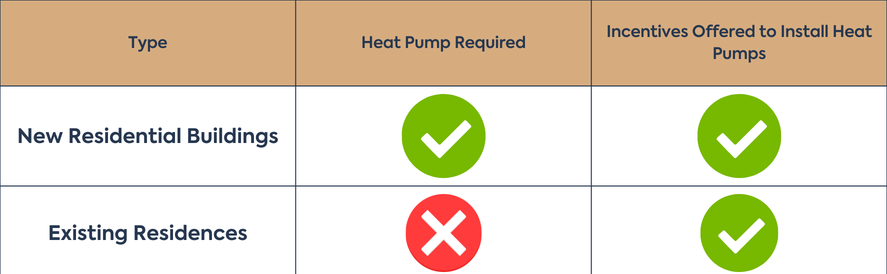
- Oregon has recently mandated that any new residential buildings must install a heat pump, not a standard AC condenser.
- Existing homes do not have to switch to a heat pump, but Oregon authorities offer a variety of incentives to encourage homeowners to convert to high-efficiency HVAC systems.
- Heat pump systems may need supplemental or second-stage heating hardware in regions with harsh winter temperatures.
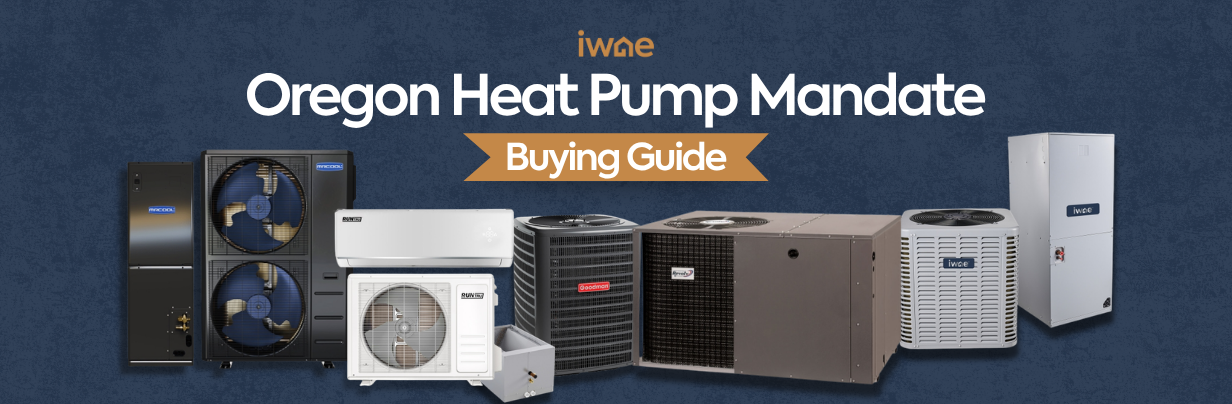
On February 18th, 2026, the Oregon Building Code Division’s Residential and Manufactured Structures Board (RMSB) updated the state’s residential code with a focus on energy efficiency and sustainability. According to this mandate, new residential structures are required to utilize heat pumps rather than traditional ducted air-conditioning. Under these new rules, Oregonians are expected to save around $125 per month on energy costs, significantly reducing the strain of rising energy costs. While this is a cost-effective resolution, it can still be difficult to wade through the specifics to find the perfect heat pump for your home in Oregon. Keep reading IWAE’s Oregon Heat Pump Buying Guide to learn more about this new mandate and the best heat pumps on the market today.
What Is the New Oregon Heat Pump Mandate?
The new Oregon Heat Pump Mandate states that new residential buildings must be fitted with heat pumps rather than traditional air conditioning units. This decision was made in the face of growing energy costs hurting low-income Oregonians. According to Eleanor Ponomareff, Talent City Council President, these changes are also a step toward resilience and sustainability. Heat pumps run purely on electricity, meaning they are not reliant on fossil fuels like liquid propane or natural gas to provide heating and cooling. Constructed for high-efficiency results, heat pumps significantly reduce the amount of energy needed to create comfortable indoor temperatures.
However, heat pumps are not perfect heating and cooling solutions. Heat pumps struggle to maintain efficiency standards in extreme temperatures, which means that some homeowners may need auxiliary heating or cooling to supplement their heat pump at certain points of the year. Luckily, auxiliary heating is not prohibited by this new mandate. The mandate states that heat pumps must be installed to cover the first-stage heating. This code allows residents to install supplemental natural gas heating, such as furnaces, to reduce strain on the power grid during high-use times, such as during extreme winter weather.
Do Existing Homes Have to Upgrade to Heat Pumps?
Under the new Oregon Building Code Division’s Residential and Manufactured Structures Board heat pump mandate, existing homes do not have to convert to heat pumps. This mandate only applies to new residential buildings. However, the Oregon state government and other local entities encourage homeowners to update their homes to be more energy efficient and sustainable. As a result, numerous incentive programs are in place to encourage conversion to high-efficiency HVAC systems.
High Efficiency HVAC Upgrade Incentives in Oregon
The state of Oregon currently offers several incentives to promote energy efficiency, including:
- The Home Efficiency Rebates Program: Aimed at existing single-family and multifamily homes, this is a performance-based rebate program that encourages families to increase home energy efficiency by at least 20%, based on a home energy assessment and any upgrades that impact efficiency.
- The Home Electrification and Appliance Rebates Program: This program is aimed at low to moderate-income households and provides rebates for high-efficiency electric appliance installation. Installations and upgrades must adhere to a list of eligible products.
- Oregon Heat Pump Purchase Program: Under this program, homeowners, rental property owners, and new construction can receive a $2000 rebate for purchasing and installing a heat pump.
- Community Heat Pump Deployment Program: This is a financial assistance program aimed at owner-occupied residents. Residents can receive $5000 in assistance to install a heat pump that meets minimum efficiency requirements, or $7000 to install a heat pump that meets higher efficiency requirements. An additional $4000 can be received to make other improvements that maintain home temperatures.

The Best High-Efficiency Heat Pumps for Oregon
Before choosing the best heat pump for your home, do a bit of research about your climate region. Winter and summer extreme temperatures are important to know, as heat pumps are only efficiency-rated down to certain temperatures. Innovations in the field have resulted in heat pumps that are rated down to -22 degrees Fahrenheit, but standard heat pumps are only rated between 5 degrees Fahrenheit and -13 degrees Fahrenheit. Also, be aware of the level of humidity and corrosive weather conditions experienced in your region. Some heat pumps feature gold fin coating for extra corrosion resistance, which is especially necessary in harsh coastal climates.
When looking at heat pumps, you have four main options: ductless mini-splits, heat pump split systems, dual-fuel heat pumps, and ground-source (geothermal) heat pumps. Before purchasing any heat pump, check to make sure it fits all code or incentive requirements.
IWAE Favorite Heat Pumps
Purchase Your Heat Pump Today
Heat pumps are smart investments for any home, with or without a push from the government. Heat pumps reduce your energy usage and the amount of money you spend on energy every month. With high efficiency standards, they provide more heating and cooling power with less energy consumption than traditional HVAC systems. If you need help selecting the best heat pump for your home, give the experts at IWAE a call. The in-house sales representatives are trained to help you translate your home’s needs into the perfect heat pump order. Call us now or hop over to the site and start browsing our wide selection of energy-efficient heat pumps.