

Key Points
- Testing and cleaning your air conditioner every year during the spring is crucial to guarantee reliable performance throughout the summer. Routine HVAC maintenance should happen before a period of heavy use.
- Spring maintenance for your HVAC includes checking air filters, clearing debris from inside and around the indoor and outdoor units, swapping fan rotation, replacing batteries in detectors, ensuring safe humidity levels, and refilling propane tanks.
The buds on the bushes are just starting to bloom, the leaves are reforming on tree branches, and sweet, floral scents are wafting on the breeze. The world has finally begun to thaw after a harsh winter, meaning spring is on the horizon. It’s time to shake off the dust and grime that built up over this particularly harsh winter. So crack open a window, grab your cleaning supplies, and let IWAE guide you through a few HVAC spring cleaning steps to get your home ready for the upcoming season.
Spring Is the Best Time to Prepare for Summer AC Needs
Not only does spring offer better temperatures to inspect and clean your HVAC equipment, but it also gives you time to replace and test your hardware before the heavy-use period of summer. Upgrades that seem small, like swapping out your standard controller for a smart thermostat, make a huge impact on the overall performance and efficiency of your heating and cooling system. For systems that simply can’t keep up anymore, this is the perfect time to invest in new HVAC equipment.
We’ve explained in the past how important it is to check on your heating hardware before autumn arrives, so it shouldn’t surprise you that your cooling system needs a tune-up before summer’s in full swing. After all, nothing’s more miserable than waiting until a heat wave rolls in to find out your air conditioner isn’t working properly. Calling in a maintenance emergency not only leaves you at the mercy of the technician’s availability, but it also costs an arm and a leg. Annual maintenance is crucial for long-term consistency and safe operation. By having your system’s annual servicing scheduled during the off-season, you’ll identify any potential problems before they cause additional system damage.
Spring Cleaning HVAC Checklist
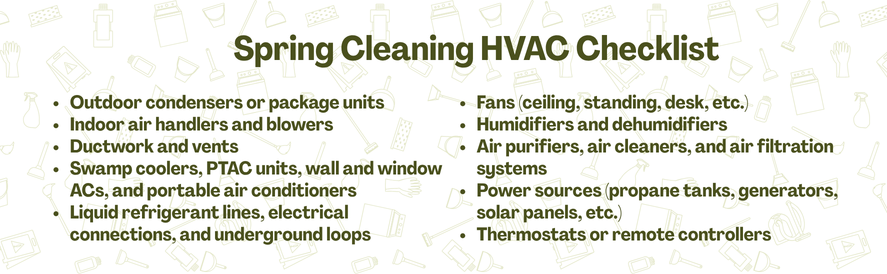
When it’s time to do a deep spring cleaning of your heating and cooling system, it’s important to think about each piece of hardware that plays a role in your climate control. Be sure to check any of the following equipment that you have in your home:
- Outdoor condensers or package units
- Indoor air handlers and blowers
- Ductwork and vents
- Swamp coolers, PTAC units, wall and window ACs, and portable air conditioners
- Thermostats or remote controllers
- Liquid refrigerant lines, electrical connections, and underground loops
- Fans (ceiling, standing, desk, etc.)
- Humidifiers and dehumidifiers
- Air purifiers, air cleaners, and air filtration systems
- Power sources (propane tanks, generators, solar panels, etc.)
Change or Clean Air Filters
Most central HVAC systems have disposable air filters that are built to last a couple of months, then be discarded, taking the dust and particulate matter captured by the pleats with them. These replacement air filters are everywhere, but not every seller will offer options with the MERV rating you require. Ductless systems, like the DIY series from MrCool, often sport reusable filters designed to be cleaned every few months. Regardless of what type of air filter your system uses, be sure to give it the TLC it needs to keep your air safe and clean.
Your air filter is about to have its work cut out for it with the influx of pollen, dander, and other allergens that enter your home during springtime. Your filters did the hard work of keeping dust and debris from your ducts through the winter; now it’s time to give your system a fresh start for the new season. After all, air filter monitoring and maintenance are the easiest and most important pieces of HVAC maintenance for homeowners to keep up with.
Remove Any Dust or Debris Inside
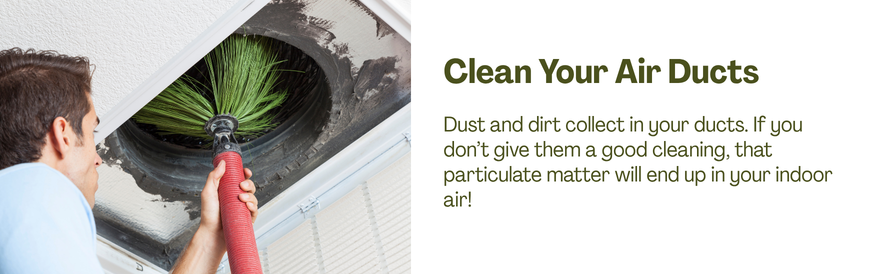
What is all that gunk in your windowsill? When did so much dust accumulate on the ceiling fan? The speed at which dirt accumulates during the shut-in period of winter is astonishing. It may be tempting to leave some of the grime, but cutting corners on your cleaning tasks will only hurt you and your HVAC equipment in the long run. While you scrub and wipe away all the unwanted contaminants, let your curtains and bedding take a run through the washing machine. Materials such as these soft, porous fabrics love to hold onto allergens that inevitably wind up circulating through the HVAC system. Once you have the household wiped down, take a look at your indoor HVAC unit. Be sure to remove any dust or dirt from the area surrounding the cabinet, as well as any that’s managed to collect in the unit itself.
Change Ceiling Fan Rotation
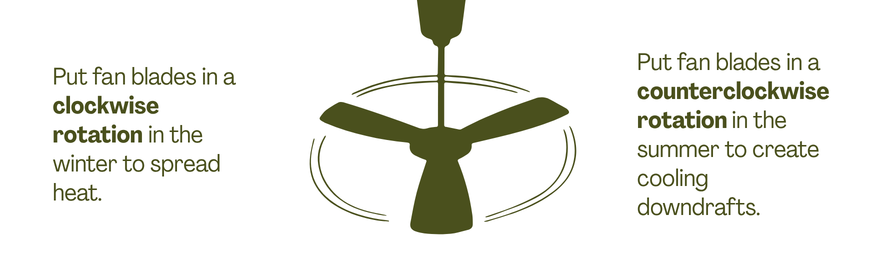
Did you know your ceiling fan has two settings? This simple fact is not as well-known as it should be, given the impact it makes on your temperature regulation! Most often determined by a physical switch on the fan itself, be sure to keep your fan spinning in the right direction for the season:
- Counterclockwise rotation in summer produces a downdraft for direct cooling
- Clockwise rotation in winter leads to an updraft that spreads warm air through the space
Check and Replace Batteries
Remember that Thanksgiving dinner disaster where you removed the batteries from the smoke detectors? It’s time to make sure that the mistake is fixed. Even if you’ve never been the type to do more than the hush button, it’s important to verify that every smoke and carbon monoxide detector in your home has batteries that have plenty of juice. The best option is to replace the batteries altogether to guarantee your detectors won’t stop working when they’re needed the most. If you’re someone who doesn’t like to waste anything, like me, you may not like the idea of swapping out a battery that you know doesn’t need to be replaced. My solution is to put in a fresh battery once a year for peace of mind, then save the half-spent batteries to use in remote controls, mice, and other small electronic devices. That way, everything is used without any waste or lapse in safety! After all, fire prevention and carbon monoxide safety should never be left up to chance.
Check Humidity Levels
Where winter is the season of dry air, summer is known for bringing the heat and the humidity. To avoid window condensation and high humidity levels that breed mold, mildew, and other unwanted allergens within your home, solutions like adding a dehumidifier to eliminate excess moisture from the air can make a world of difference.
Looking for a year-round solution to keep tabs on the humidity, temperature, and other factors that influence your IAQ (Indoor Air Quality)? Try the Trane Awair Air Quality Monitor! Maintaining IAQ is made easy by this at-a-glance smart device.
Schedule Routine Maintenance
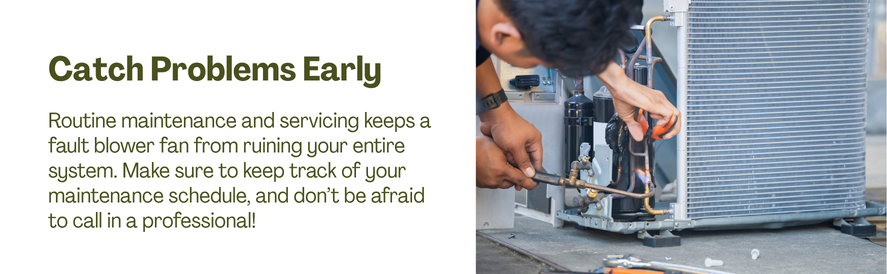
Weddings have dress rehearsals, live music performances have sound checks, and your AC should have a test run before summer temperatures settle in. If you find any issues, catching them before the heat beats down is crucial to keeping your home cool and comfortable. Call and schedule routine maintenance with a trusted technician in your area. There are many essential HVAC servicing tasks you and a trained professional can do to prevent damage and ensure reliable performance for the upcoming summer season and beyond.
Check for Damage and Clear Debris Outside
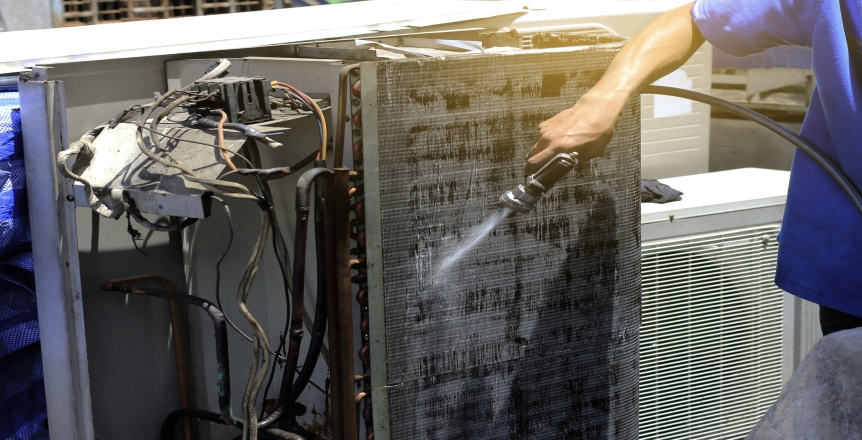
You’ve taken care of the inside; now it’s time to check out the hardware in your backyard. We all know that April showers bring May flowers, but no one talks about the sheer volume of dirt, debris, and branches knocked down by the seasonal storms that hit right at the start of spring. Check for damage and remove debris around your outdoor HVAC hardware to leave enough space for unrestricted airflow. Pull out any leaves, pine needles, or other scraps from the grates or inside the unit to keep the system operating safely. If you find damage, call a repair technician as soon as possible.
Once you have the physical condenser cleaned up, take a look at the refrigerant hook-ups and line set for any signs of leaks, clogs, or damage. Without a reliable refrigerant flow, your HVAC system will fail to create your ideal ambiance. Leaks not only cause refrigerant loss, but they also allow harmful contaminants to enter your system and wreak havoc. Rather than patching a liquid line with tape and hoping for the best, buy a new copper line set if you run into any issues.
Check Propane Levels
For those living in areas without natural gas hook-ups, propane is a way of life. If you have a gas furnace that was fueled by the LP tank all winter, it’s time to check those levels and make sure you have enough fuel left for your spring and summer needs. If you find it’s time to grab a refill, it might be worth grabbing a 20-pound tank while you’re out. Having extra tanks of LP at home guarantees you’ll be ready when the weather is nice enough for grilling and other summer activities. We have some spring break recipes that give you the perfect excuse to break out the grill a little early this year.
Prepare your HVAC for Spring with IWAE
The sweltering heat of summer can be tough to deal with, especially when your air conditioner is on its last legs. Spring cleaning and maintenance do more than give your home a refresh; they ensure the dependable performance you and your family need to keep your home crisp when temperatures soar. If spring cleaning isn’t enough to get your home ready for summer, reach out to the team at IWAE. We’ll give you the guidance you need to guarantee the climate control results you’re looking for.