Key Points
- R410A is an HFC refrigerant with zero ODP, but a high GWP. With sustainability becoming more of a focus for HVAC, the industry has started to migrate to options with lower global warming potential like R454B and R32.
- The R410A phase out is happening in stages with the process having started in 2020. New systems manufactured during or after 2025 cannot utilize R410A, R410A systems cannot be installed as of 2027, and a complete ban on R410A is likely to be in effect in most places by 2040.
- To prepare for the full R410A phase out, be sure to familiarize yourself with your current system, educate yourself with the new options, talk with a professional, and plan your upgrade ahead of time to budget for the change.
Ever wonder how your air conditioner (AC) works its cooling magic? The simple answer is refrigerant. Refrigerant is a liquid that runs through your heating, ventilation and air conditioning (HVAC) system. As it travels, it absorbs heat from inside your home and releases it outdoors, keeping the space cool. While refrigerant is helpful, innovations are making it more efficient and sustainable.
R410A had been the main refrigerant in HVAC systems for decades, but its high global warming potential (GWP) has led to government action. Along with most other developed nations, the U.S. Environmental Protection Agency (EPA) announced a gradual phase-out of R410A. While the process started in January of 2026, the full phase-out will take place in stages over the coming years. As a result, industry regulators started taking steps to phase out R-410A systems starting in 2025, and continuing over the following several years.
What Is R410A?
R-410A refrigerant is a hydrofluorocarbon (HFC) refrigerant. HVAC systems have used R-410A for commercial and residential properties since the early 2000s. After a similar move where the Environmental Protection Agency (EPA) cracked down on refrigerant sustainability, we saw a switch to R-410A as a friendlier alternative to the previous standard, R22. R410A does not release chlorine when heated like R22 does, which gives it a lower ozone depletion potential (ODP) of zero.
Since R-410A has an Ozone Depletion Potential (ODP) of zero, it doesn't deplete the ozone like older refrigerants. R-410A is used in central air conditioning systems, split systems, and commercial rooftop units.
Advantages of R-410A
R-410A has many benefits — that's why it's been so popular with the HVAC industry.
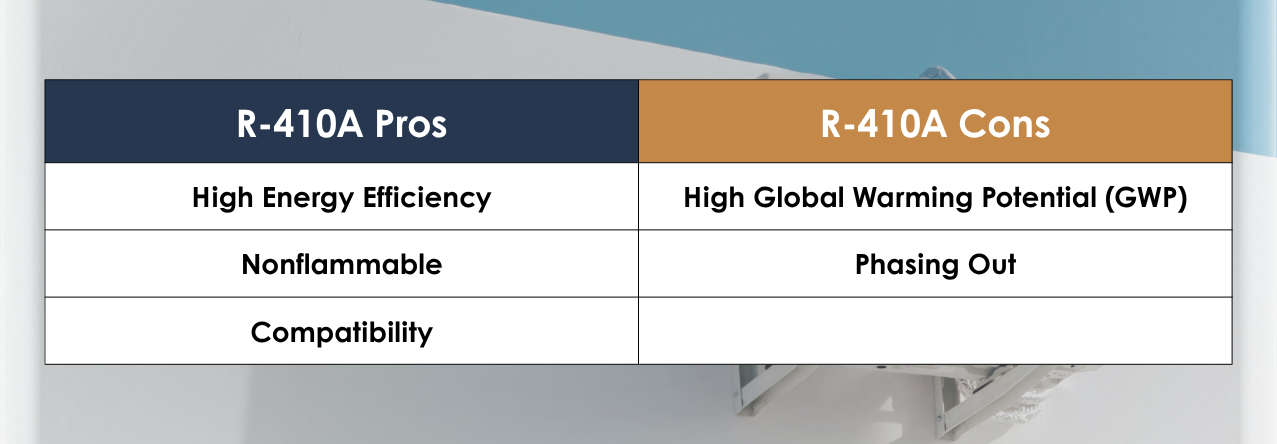
- High energy efficiency: R-410A offers excellent energy efficiency to systems that use it. While R-22 was preferred before tighter regulations, R-410A offers good energy efficiency while meeting former standards.
- Nonflammable: R-410A is a nonflammable refrigerant. This quality makes it a safer choice compared to more flammable refrigerants.
- Compatibility: R-410A is also compatible with existing HVAC technology. From the early 2000s until the recent refrigerant upgrade mandates, manufacturers designed equipment with R-410A in mind. This means it was easier to get R-410A-compatible technology compared to previous refrigerants.
When it comes to sustainability, R-410A's ODP of zero means it doesn't harm the ozone layer like R-22. It's important to choose chemicals that protect the ozone layer — the ozone layer blocks ultraviolet B radiation from reaching the Earth's surface, which causes skin cancer, cataracts, marine damage and crop issues.
What Are Some R-410A Environmental Concerns?
R-410A was a big improvement over older, ozone-depleting refrigerants. While R-410A was a step in the right direction, it's still less environmentally friendly than newer options. The main downside to R-410A is its global warming potential (GWP).
GWP measures the heat a greenhouse gas holds in the atmosphere. This heat amount is then compared to the heat carbon dioxide traps, resulting in the GWP figure. The more heat trapped in the atmosphere, the hotter the Earth gets, causing severe environmental issues.
R-410A has a GWP of 2,088, which means it's a high-GWP refrigerant.
The R410A refrigerant phase-out is part of a larger initiative to stop using all HFCs with a high global warming potential (GWP). To reduce the environmental impact of residential HVAC equipment, governments worldwide are shifting toward nontoxic, low-GWP refrigerants.
Although R410A has a lower ODP than R22, it has a higher GWP. Its high efficiency minimizes the potential amount of emissions it could release, making it more environmentally friendly overall. However, low-GWP HFCs and other, greener refrigerants are taking over as the safer alternatives — and they will be for some time.
What Does the Refrigerant Regulatory Landscape Look Like?
The push to phase out R-410A came from its high GWP and changing environmental regulations. In 2020, the U.S. government introduced the American Innovation and Manufacturing (AIM) Act.
The Act allows the EPA to enforce HFC phase-outs, encouraging industries to go greener. The AIM Act jump-started the gradual discontinuation of R-410A — starting January 1, 2025, manufacturers were mandated to create new HVAC products using alternative refrigerants.
Alongside the AIM Act, here are two of the main regulations affecting R-410A's use and phase-out:
- Montreal Protocol: The Montreal Protocol was established in 1987 after the effects of high-ODP products on the ozone were discovered. To protect the ozone layer, chlorofluorocarbons and hydrochlorofluorocarbons like R-22 were phased out.
- Kigali Amendment: The Kigali Amendment was introduced in 2016 to discontinue high-GWP products like R-410A.
How Long Will the Phase-Out Take?
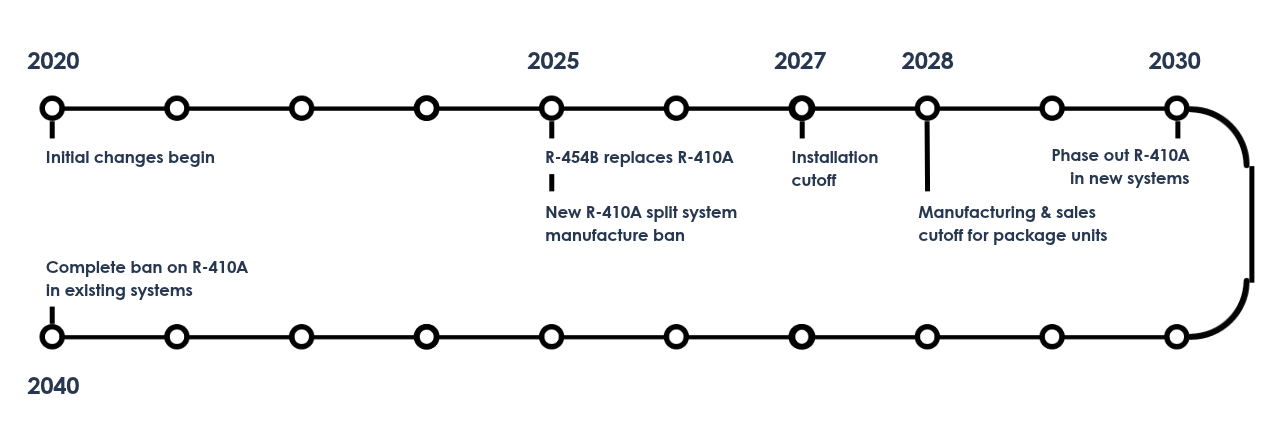
Because R410A is so widely used, it will take a long time for the country and the HVAC industry to adjust to the change. Here's what the projected timeline for the phase-out looks like:
- 2020: The initial changes regarding production and importation of high-GWP refrigerants like R410A took effect.
- 2024: R410A became less available as manufacturers continue to reduce production.
- 2025: A new refrigerant called R454B is expected to replace R410A as the new industry standard. New systems with R410A residential splits may no longer be manufactured.
- 2025-2026: Legally manufactured R410A products may be installed until supplies are gone.
- 2027: Installation cutoff
- 2028: Manufacturing and sale cutoff for package units
- 2030: Most developed countries aim to completely phase out R410A use in new systems by this decade.
- 2040: Complete bans on R410A in existing systems will come into effect in most locations. The transition will likely take longer in some regions than in others, so 2040 is a rough estimate.
In the EPA's plan, manufacturers will reduce high-GWP HFC usage and production in increments through an extended phase-down period. The phase-down began in 2022 and will expand gradually over 14 years:
- 2022: 10%
- 2024: 40%
- 2029: 70%
- 2034: 80%
- 2036: 85%
What Are Some R-410A Alternatives?
There are several substitutes for R-410A, including:
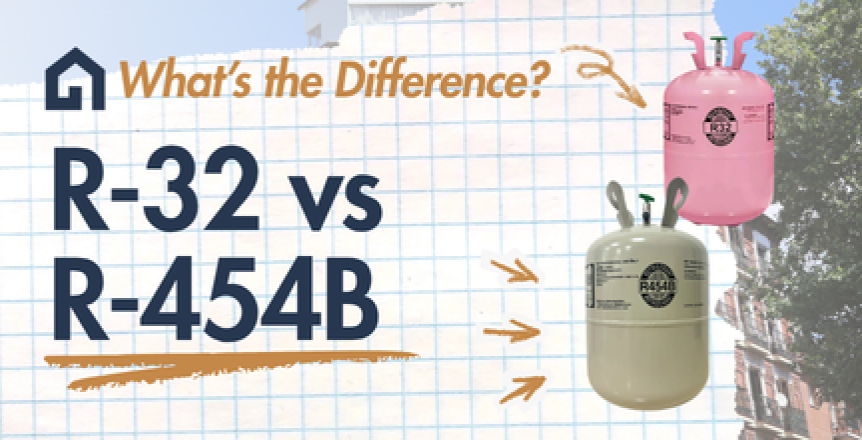
- R-32: R-32 meets current GWP limits for refrigerants. It's mildly flammable and energy-efficient. This option increases the fire risk slightly while providing essential efficiency for users.
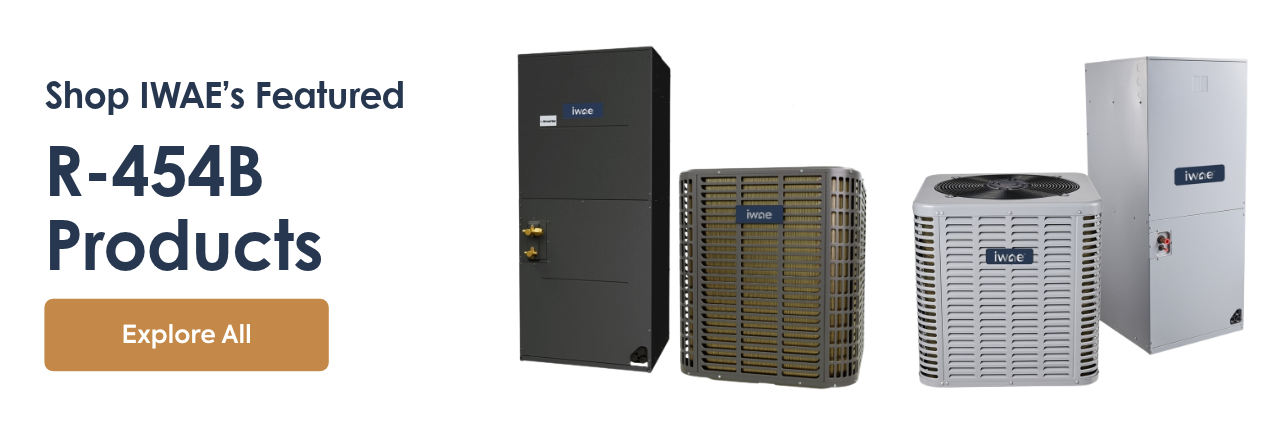
- R-454B: With a 466 GWP and an ODP of zero, R-454B is a great choice for anyone looking to exceed environmental requirements. R-454B has the benefit of being compatible with many existing HVAC systems, reducing the need for expensive system overhauls.
- R-452B: R-452B is also being pushed as an R-410A alternative. Its GWP of 697 is under the 750 limit set by recent regulations. It's a good choice for companies looking to balance performance with sustainability. However, the higher GWP means it may be discontinued in the coming years.
- RS-53 (R470A): RS-53 is a new nonflammable drop-in replacement for R410A. Since it has a low GWP, it should keep your R410A system running well into the future.
What Are the Implications of the R-410A Phase-Out?
While the R-410A phase-out means saying goodbye to a quality HVAC refrigerant, it's time for a change to more sustainable products. Expect to see a temporary rise in costs as manufacturers work with the switch. Manufacturers need to retrofit their existing lines to accommodate newer refrigerant options. Extra labor means extra costs for manufacturers, which they'll likely pass on to consumers. You might see higher HVAC equipment costs in the short term.
As manufacturers start producing equipment that fits new refrigerants, prices should come back down. Additionally, the replacement refrigerants are excellent, energy-efficiency alternatives. With a more efficient system, HVAC systems will use less energy, leading to lower energy costs and a reduced environmental impact.
Importantly, existing R-410A products will not suddenly become illegal to operate. If you have a system that utilizes R-410A, you don’t need to immediately look for a new system. Still, homeowners should keep an eye out for long term impacts. Remember that R410A will gradually become harder to find, increasing its price and making maintaining your existing system substantially more costly every year.
What Can You Do to Prepare?
As a homeowner, what can you do to get ready for the upcoming changes? Here are four steps you can take to prepare your HVAC system for the phase-out's final stages:
1. Educate Yourself
Get familiar with all the R410A alternatives that will be available to you as R410A becomes less available. The more you know, the easier it'll be to choose a suitable R410A refrigerant replacement. Plus, you'll be better able to plan the best time to replace your existing HVAC unit, which can help you save on replacement costs and valuable setup time.
2. Talk to the Pros
Another great way to gather information is to get input from experienced HVAC professionals. If you have a technician you usually call on for maintenance and repairs, it might be worth reaching out and asking a few questions to hear what they have to say about your situation.
You can also browse HVAC industry forums and similar resources to see what experts are saying about the change and why it matters. Bottom line — when in doubt, ask an HVAC expert.
Contact our support team for immediate assistance and answers to those pressing HVAC questions.
3. Evaluate What You Already Have
Unless you're dealing with an AC that's already on its way out, your best bet for making a smooth transition is to squeeze as much use as possible out of your existing equipment.
Some important assessment considerations include the unit's age, performance reductions and rising operating costs.
Depending on the type of air conditioner you own, you might be able to retrofit it to accommodate newer, more eco-friendly refrigerants or make repairs that reduce its environmental impact.
4. Plan and Budget for Upcoming Changes
An HVAC system is a big investment, and as technology changes, prices are likely to change dramatically. When the first generation of low-GWP systems hits the market, they're going to be expensive compared to older options.
Fortunately, they won't be too expensive for long. Although these new refrigerants will be costly for the first few years, prices will likely go down as they become more widely available.
Frequently Asked Questions About the R-410A Phase Out
Why is R-410A being phased out? What is happening to R-410A?
While R-410A was an improvement on its predecessor R-22, it still has a high global warming potential (GWP). R-410A has a GWP of 2,088.
When is R-410A banned? Is R-410A discontinued?
The manufacturing cutoff for R410A split systems happened in 2025, and will be cutoff for package units in 2028. If you have a system that utilizes R410A, it won’t automatically become illegal to operate. You can still have R-410A units serviced as normal, but when it is time for a replacement, you will not be able to get a new R-410A system.
What replaces R-410A? What is R-454B?
There are several refrigerants posed to replace R-410A, including R-454B, R-32, R-452B, and R-470A. However, the two leading refrigerants are R-454B and R-32.
Can I still buy R-410A equipment?
Yes, you can still buy R-410A equipment that was legally manufactured prior to the 2025 cutoff.
Will R-410A get more expensive?
It’s likely that the price for R-410A will increase the further out from the ban that we get. As it becomes rarer and harder to find, prices may increase.
Get Efficient, Sustainable HVAC Solutions From IWAE
At IWAE, we don't just sell HVAC systems — we provide peace of mind. With over 30 years in the business and two decades as an online retailer, we know what it takes to get you the right equipment at the right price. We have everything from air conditioners and furnaces to high-quality filtration systems for your space. With our extensive HVAC selection, you're sure to find environmentally friendly and efficient equipment for the job. Whether you're looking to get ahead of the curve regarding new regulations or are interested in our other products, we're here to help. Our competitive pricing will get you an unmatched solution you can rely on. Explore our HVAC options today!