
Key Points
- Shopping for green HVAC technology means finding the right size zoned system with a good efficiency rating to heat and cool your home.
- Smart thermostats optimize energy consumption, helping homeowners save up to 23% a year without any other changes to their HVAC setup.
- Geothermal heat pumps are a green solution for climate control that saves money on energy expenses and boasts exceptionally long lifespans.
The world is going green, and that includes the HVAC industry. More and more, manufacturers are developing and producing new HVAC systems with a focus on energy efficiency and environmental responsibility. Are you skeptical about green HVAC technology? Do you believe that it's too expensive? There are definitely some high-dollar, high-performance energy-efficient systems out there. After all, you get what you pay for, and when you pay top dollar for top performance, that’s what you’re likely to get. However, not all green technology is built to break the bank. It is possible to invest your dollars wisely in smarter heating and cooling appliances that perform and save, but it can be hard to separate quality green technology from the background noise. How can you tell what energy-efficient product or accessory will save you the most in the long run? What energy-saving features and benefits do you need to prioritize in an HVAC system? How can you optimize your HVAC use to reduce both your utility bills and your carbon footprint? Keep reading this guide to learn more about what qualities you should look for in green HVAC technology.
Air Conditioner Size
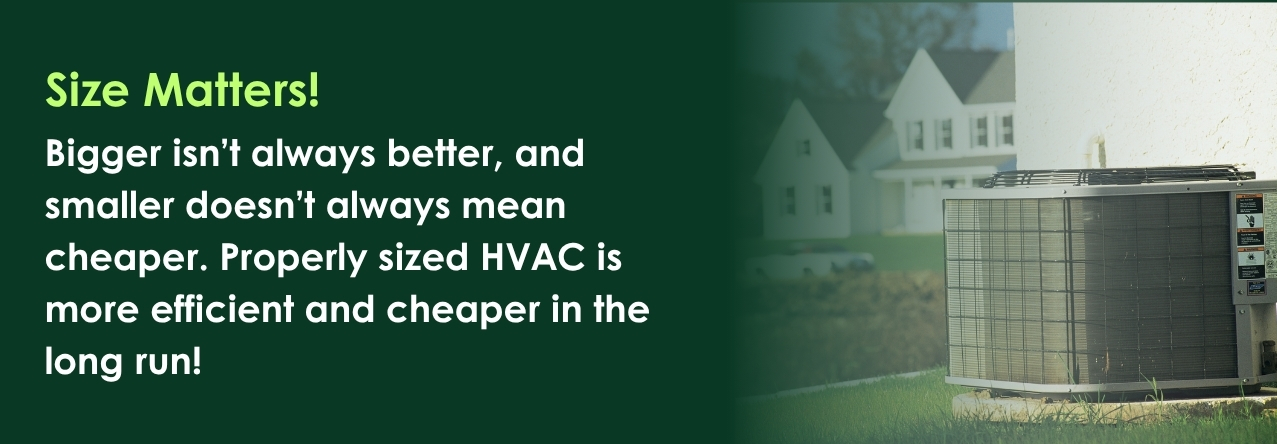
Getting energy-efficient HVAC doesn’t always mean buying the newest, highest-rated unit on the market. A great place to start is by getting a properly sized unit. Size matters when it comes to your AC unit because a properly-sized unit works more efficiently and prevents HVAC energy waste. If you have too small a unit, your cooling system won't have enough power to adequately cool your space (and prevent you from sticking to the furniture). Undersizing your unit also adds extra wear and tear and burns through more electricity than necessary. Conversely, an oversized unit will run shorter air cycles, which aren’t long enough to pull extra humidity out of the air or create consistent and comfortable temperatures. This is called short-cycling.
The reason that HVAC size matters boils down to the science behind how AC works. The cooling abilities of air conditioners are measured in BTUs (British Thermal Units). BTUs measure the quantity of heat a conditioning unit can remove from a room per hour. There is a balance between the BTUs of a unit and the square footage of a room it will be cooling, which HVAC professionals determine by performing a Manual J Load Calculation. Finding a heat pump or air conditioner that correctly fits the size of your home is important, as it will have the longest life and save you the most money on your utility bills.
Energy Star Certified
Is your goal real green HVAC comfort at home? Then, scoring an Energy Star Certified system should be at the top of your list. HVAC systems are known as energy hogs because they typically consume the majority of the household's electricity. When you consider the price of running AC, a super-efficient system isn't only responsible: it's a smart choice to lock in savings for years. Plus, Energy Star appliances often qualify for tax credits and rebates that "cheaper" systems don't. Fortunately, Energy Star Certified green HVAC products are fairly easy to find. The manufacturers usually put that kind of marketing right in your face. But, if you're ever wondering whether a particular product meets Energy Star criteria, just use the EPA's Energy Star Product Finder site.
Smart Thermostats
Smart thermostats are a really cost-effective way to reduce your energy consumption. Some brands even tout utility savings of up to 23% a year. Calculate a decade of your past energy bills, and 23% a year can turn into a really big number. Some of the more sophisticated smart thermostats, like the Daikin One+ Smart Thermostat, adapt to your daily habits. They automatically adjust the temperature in your home as you come and go. Plus, thermostat control via your smartphone makes it easy to modify settings while you’re not home, at work, at the gym, or anywhere that you can get a signal, which in this day and age is pretty much everywhere.
HVAC Zoning
A zoned system creates multiple heating and cooling zones in a building's interior. Each zone has its own separate controls, conditioned air supply, ventilation, etc. Not only does this mean that each zone is adequately cooled and heated, but it also means that unused portions of a building can be set below the typical 'comfort standard'. This can save a lot of energy.
Let's say you have a two-story home with a basement. A zoned system is installed. That home is then broken into a single zone for the basement, a single zone for the main floor, and a single zone for the upstairs. The kids just left for college, and you don't go upstairs very much. Simply adjust the upstairs zone to what you would otherwise consider an uncomfortable temperature. Your HVAC system doesn't have to work as hard, and you don't sacrifice comfort in the other areas of the house where you spend your time. Properly installed, zoning can be a clever way to get terrifically green HVAC air comfort.
Geothermal Heat Pumps
Let's talk about really green HVAC tech. Geothermal technology has been around for more than 50 years. In the last decade, this green HVAC tech has seen a rise in usage because of its ultra-eco-friendly features and potential for massive energy savings. A geothermal heat pump can slash utility bills up to 65% annually (or more). That's not to mention the fact that ground-source units qualify for the best renewable energy rebates available. Considered a long-term investment by HVAC professionals, the life span for a geothermal loop network is 50 years or more. Expect to see more systems with such eco-friendly options in the future, since they lower peak electricity usage and greatly reduce the carbon footprint of the building's air comfort system.
If you've been looking for the "ultra-expensive" green HVAC option, geothermal heat pumps are it. Yes, they are amazingly energy efficient. They have to be, because installation costs can pile up into the tens of thousands of dollars. That is all defrayed by the savings over time and the generous federal and local incentives. However, not all homeowners can afford to absorb the high costs of a geothermal install, no matter how much they might want to do so. Still, if you can swing geothermal, there is simply no better way to get green HVAC and save a ton of money on your bills.
Save More With Green HVAC
Even if you can’t afford the highest-tier green HVAC like geothermal heat pumps, you can still reap the benefits of energy-efficient heating and cooling. Whether you adjust your behavior to be more eco-friendly and energy-friendly, or you invest in Energy Star-rated heat pumps, furnaces, and air conditioners, you can go green. It’s just a matter of finding the right fit for your current situation. Luckily for you, the whole home comfort experts at IWAE are here to help. Simply give us a call, explain your goals, and we’ll help you go green.