

Key Points
- Geothermal heat pumps provide heating and cooling that is quieter and longer lasting, while maintaining higher efficiency than air-source systems.
- Geothermal heat pump components include the pump, ground loops, air delivery, and desuperheater. Many ground-source systems also integrate an auxiliary electric heater.
- Ground loop installations are open- or closed-loop. Open-loop systems require a suitable water source, whereas a closed-loop system can be installed in a water source or underground.
Don’t be afraid of the price tag: a geothermal heat pump is one of the most efficient tools available to provide both heating and cooling without sacrificing comfort. They work effectively and can last for decades if properly maintained, but knowing which parts to maintain can be difficult. Unlike popular DIY HVAC systems, geothermal heat pumps require more technical know-how to install and maintain, but that doesn't mean you have to call in a professional for everything. Use our Geothermal Heat Pump Buying Guide to learn critical information about these great home systems and their parts.
Geothermal Heat Pump Benefits
Ground-source technology delivers several benefits:
- They take advantage of the relatively constant temperature environment only a few feet below the Earth's surface.
- With the right set-up, all systems can heat, cool, and provide hot water.
- Geothermal tech is quieter, lasts longer, and operates more efficiently than air-source heat pumps.
- Many homeowners save enough money to equal the additional costs in 5 to 10 years.
Geothermal Heat Pump Components

Ground Loop
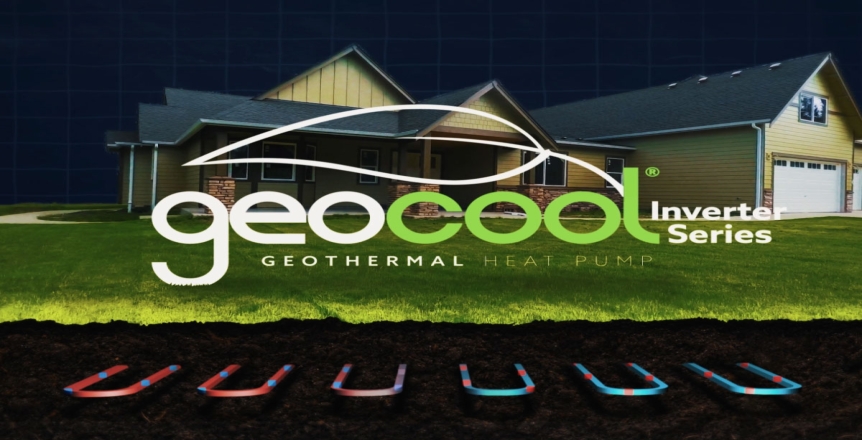
The ground loop forms an underground, closed pipe network. Filled with refrigerant or water, the ground loop allows the system to exchange heat in a stable sub-surface environment. To simplify this part of the project, a complete geothermal installation kit includes the necessary headers and manifolds to ensure a secure, pressurized connection to the indoor unit.
Pump
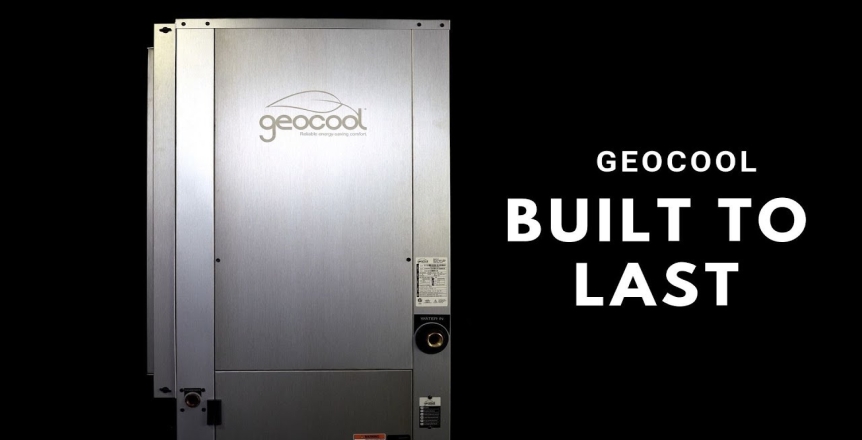
The pump component of a ground-source system houses the compressor and other necessary control components. It is housed inside a mechanical room, attic, or basement. However, for properties where indoor floor space is limited, geothermal package unit systems are available that house all components in a single outdoor cabinet. Unlike a heat pump condenser, a geothermal pump is never exposed to inclement weather.
Air Delivery
A forced air geothermal system uses a typical HVAC fan or blower to distribute the heated or cooled air through a duct network. Since most American homes already have ductwork, air delivery systems are common.
Desuperheater
Desuperheater technology enables a geothermal installation to use some of the heat it generates to heat water for household use. Because geothermal can make heat as a byproduct, desuperheaters are a great way to save money on domestic water heating.
Auxiliary Electric Heater
Many ground-source units integrate an auxiliary electric heater into their overall design. The auxiliary heat can assist the system on the coldest days of the year. It is also a good idea to have an emergency heat source available if the regular system malfunctions.
Geothermal Heat Pump Installations

Closed-Loop Horizontal
A horizontal closed-loop installation uses a horizontal, parallel trench network to house the underground pipe network. As a result, the configuration requires substantial surface area to install, and is most popular in rural or suburban areas.
Closed-Loop Vertical
Closed-loop vertical installations bury the refrigerant looping in vertical boreholes, typically spaced a few meters apart. Consequently, they work well for space-premium sites or locations with soil consistency not conducive to broad, shallow trenches.
Closed-Loop Pond/Lake
Sites in proximity to a pond, lake, or other body of water can opt for a closed-loop pond/lake installation. A pond/lake loop is similar to a horizontal loop. The difference is that in a pond/lake loop, the piping is submerged underwater instead of being buried underground.
Open-Loop
Open-loop geothermal installations are the most economical to set up and achieve the highest efficiency ratings in operation. However, many municipal regulations prevent such discharges, and they require access to a good supply and quality of well water.
Forced Air vs Water-to-Water
Forced air geothermal is the most common style of installation in North America. In this type of system, the ground-source equipment is connected to conventional ductwork. As a result, a blower or air handling unit pushes the conditioned air through the network to heat or cool. Water-to-water systems operate differently. A water-to-water geothermal heat pump distributes a heated fluid to radiators or sub-floor pipes to spread heat throughout an interior space. Because of their high heating efficiency, water-to-water is popular in Northern Europe.
Geothermal Heat Pump Top Sellers
Take Up Your Geothermal Questions with IWAE
Geothermal heat pumps are complex systems, so we understand that you may have more questions that our geothermal heat pump buying guide doesn't answer. Feel free to reach out to us via email, chat, or by phone. We'd be happy to answer any questions you have.