

Key Points
- Closing off your fireplace for spring is crucial to ensure your HVAC system runs efficiently and keep wildlife out when temperatures warm up.
- Shutting down your fireplace includes inspecting for damage, removing ash and debris, turning off the pilot, cleaning the firebox, and closing the damper.
- DIY cleaning steps are not a replacement for a professional sweep. Annual chimney inspections are mandatory.
The ice has finally thawed, and the end of winter makes way for the start of spring. It’s getting to be time to look for ways to cool off, not heat up. That means shutting down your fireplace for its off-season, a break that is well deserved after a particularly brutal winter. But how do you shut off a fireplace for the spring? Do you need to deep-clean your fireplace before letting it rest? If you’re unsure what is included in closing off your fireplace, you don’t have to guess and hope for the best! IWAE is here to outline the importance of properly caring for your fireplace before an extended period of downtime, regardless of your fuel type.
Why Should I Close Off My Fireplace?
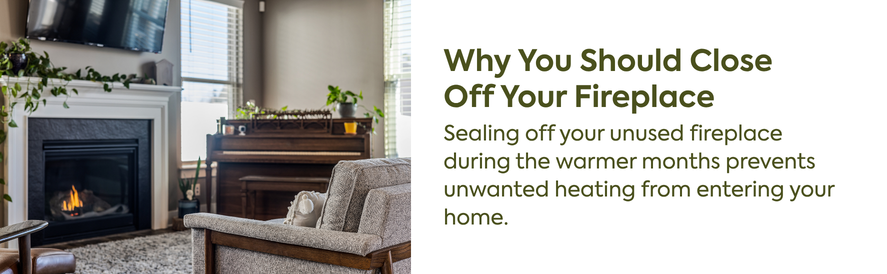
You may be wondering what’s so important about properly shutting down your fireplace at the end of winter, but the answer is surprisingly simple. Leaving your fireplace open when it’s not in use wastes energy. Think of it like leaving a window open: it forces your HVAC system to work harder and leaves your living space uncomfortable. In the same way, it’s important to winterize your home before the temperature outside plummets to trap heat in. Sealing off unused exits, like the fireplace, keeps unwanted heat from entering your home. As your grandmother might say, forgetting to close off your fireplace lets all the good air out.
Beyond influencing indoor climate control, leaving your fireplace open is an invitation for birds, bugs, and other animals to enter. When I was a child, a bird got caught in our chimney during spring while it was looking for a place to build a nest. Luckily, my parents had closed off the fireplace for the season, so it didn’t manage to get in our house, but the sound of wildlife from the flue is enough to leave anyone weary of keeping the damper open. To review, leaving your fireplace open in the off-season can lead to unwanted visitors and higher energy costs. Make sure you properly shut it all down once spring has sprung.
Steps to Close Off Your Fireplace for Spring
There are no benefits to leaving your fireplace open after winter, so let’s talk about how to properly shut it down for the year. We’ll go over each step to make the process as simple as possible so you can confidently handle closing off any type of fireplace.
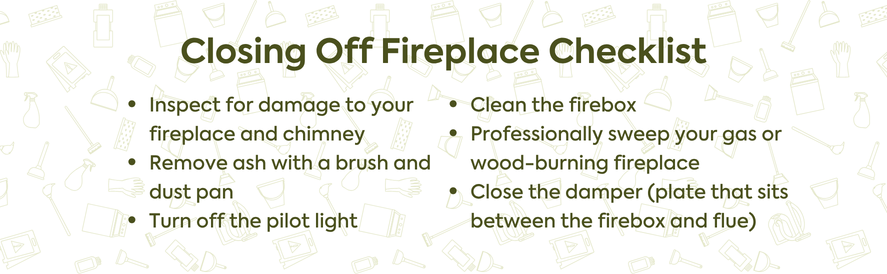
Inspect for Damage
Just because you followed proper fireplace safety protocols doesn’t mean the period of heavy use during the frigid temperatures of winter won’t leave a mark on your fireplace. You should take a look at the firebox, chimney, and any additional components to ensure they’re all still in good shape. A few questions to ask yourself when inspecting your fireplace damage are:
- Do I see any cracks, holes, or easily visible leaks?
- Is there any soot, creosote, or signs of corrosion?
- Can I easily open and securely close the flue?
If any of these answers are a cause for concern, don’t worry too much. Make note of any troubling observations you find and call in a professional to tackle the repairs or cleaning.
Remove Ash
For fireplaces that burn actual wood, ash is an inevitable byproduct of the combustion process. Once you’re confident the ashes have cooled down completely, safely remove them from the firebox using tools like a brush and dust pan, then place them in a fire-safe bucket or container that lets you properly dispose of the ashes.
If you’re someone who doesn’t like wasting anything, you can repurpose the ashes! Spread them across the lawn or garden in areas with acidic soil, set them aside so your chickens can take a dust bath, or add them to your compost bin. There’s a wide variety of ways to make use of wood ashes.
Turn Off the Pilot Light
Turning off the pilot light is crucial for anyone with a gas fireplace in their home. Now that your gas fireplace is out of use for the next few months, it’s time to shut down the gas connection and turn off the pilot light. This one should be pretty straightforward, but think about the repercussions of forgetting this step. Not only could the pilot light get blown out from a gentle breeze and cause a gas leak, but the gas the pilot light is burning off isn’t free–you’re literally burning money away by keeping it running when you won’t start a fire for a few more seasons.
Clean the Firebox
Now that the ashes are gone, it’s time to give that firebox a deep clean before it sits inactive for half a year or longer. If you haven’t already vacuumed out any remaining debris, be sure to give the whole firebox a thorough once-over with the hose of a shop vac. From there, you can use soap, water, baking soda, and some elbow grease to get out light soot build-up or other grime that’s accumulated over months of use.
Additional considerations to keep in mind when cleaning out your firebox:
- For wood-burning fireplaces, dispose of or reuse any partially burned wood. Remove any unused logs and store them safely.
- For fireplace inserts, be mindful of the pilot light while you clean. It’s best to shut off the gas connection before taking this step.
- For electric fireplace inserts, be mindful of keeping moisture away from the electronics. Use a dry cloth to remove dust or dirt from the fake logs.
Professional Sweep
You should get your gas or wood-burning fireplace professionally cleaned annually; no ifs, ands, or buts. Soot and creosote can accrue with unexpected speed, causing lasting damage to your fireplace and negative health effects for your family. A professional chimney sweep will remove this dangerous buildup while keeping any ash or soot from entering your living space, so you won’t have to worry about a new mess to clean up after a professional sweep. The NFPA (National Fire Protection Association) states in its Standard 211 safety guidelines that a proper chimney inspection is mandatory every year. We suggest that you inspect your fireplace in late fall before winter use, but that doesn’t mean you should leave all your maintenance until then. Leaving your system with soot buildup during the downtime is likely to cause bigger problems. Don’t risk it: call in a professional now to save time and money later.
Close the Damper
The damper in your fireplace is the small plate that sits between the firebox and flue. Opening the damper allows the gases and smoke created during combustion to leave the firebox via the flue. Smoke needs to exit through the chimney to keep your health safe, but if the fireplace isn’t in use, it’s better to block this exit. For the off-season, be sure to seal the damper to keep your well-conditioned air from escaping and wildlife from entering your home without an invitation.
Get Ready for Spring with IWAE
Open the windows after a shut-in winter and let in the fresh air, but keep in mind how to best prepare your home for the upcoming seasonal changes. We’ve already explained how to spring clean your HVAC system, but there are more considerations to make as winter winds down. Closing off your fireplace helps keep out the heat so your home maintains the cool, comfortable ambiance you crave as the days grow longer and hotter. Keeping up with the routine maintenance for your air filter is a bigger factor in your IAQ (Indoor Air Quality), as the allergens from budding and blossoming flowers spread their pollen at the start of spring. Doing your due diligence to optimize your home for springtime does more than keep your family safe from pollutants; it helps your HVAC system work as efficiently as possible. If you’re not sure where to start the preparations, reach out to the customer service experts at IWAE. Our team will point you in the right direction so you can enjoy top-tier temperature control all spring long.